If a venue says it uses an all-in-one platform, what should that cover? For most operators, the answer isn't just enquiries and contracts. It's ticketing, deposits and payments, food and drink pre-orders, seating plans, per-guest dietary and allergen capture, guest communications, and reporting that shows what's happening across events without exporting data into spreadsheets.
That's where the market still gets fuzzy. Some platforms are broad, but rely on third-party tools for key workflows. Others are excellent specialists, especially for registration-heavy or enterprise event programmes, but they don't always fit hospitality operations where menus, kitchen sheets and table plans matter as much as CRM. UK venue managers also have a practical buying problem. Questions about true integration depth and total cost often go unanswered, and Software Advice UK reports that 62% of UK venue managers cite hidden costs from third-party integrations as a top barrier to adoption.
So the best all-in-one venue event software isn't one universal winner. It depends on venue profile, event mix, implementation speed, and whether you need hospitality execution or enterprise event infrastructure. For broader software context, SaaS insights is worth browsing.
Table of Contents
- 1. Creventa
- 2. Tripleseat
- 3. Cvent Event Management Suite
- 4. Momentus Technologies formerly Ungerboeck
- 5. Amadeus Delphi Sales and Catering
- 6. Event Temple
- 7. iVvy Venue Management
- 8. Planning Pod
- 9. EventPro
- 10. Perfect Venue
- Top 10 All-in-One Venue Event Software Comparison
- Choosing the Right All-In-One Solution for Your Venue
1. Creventa
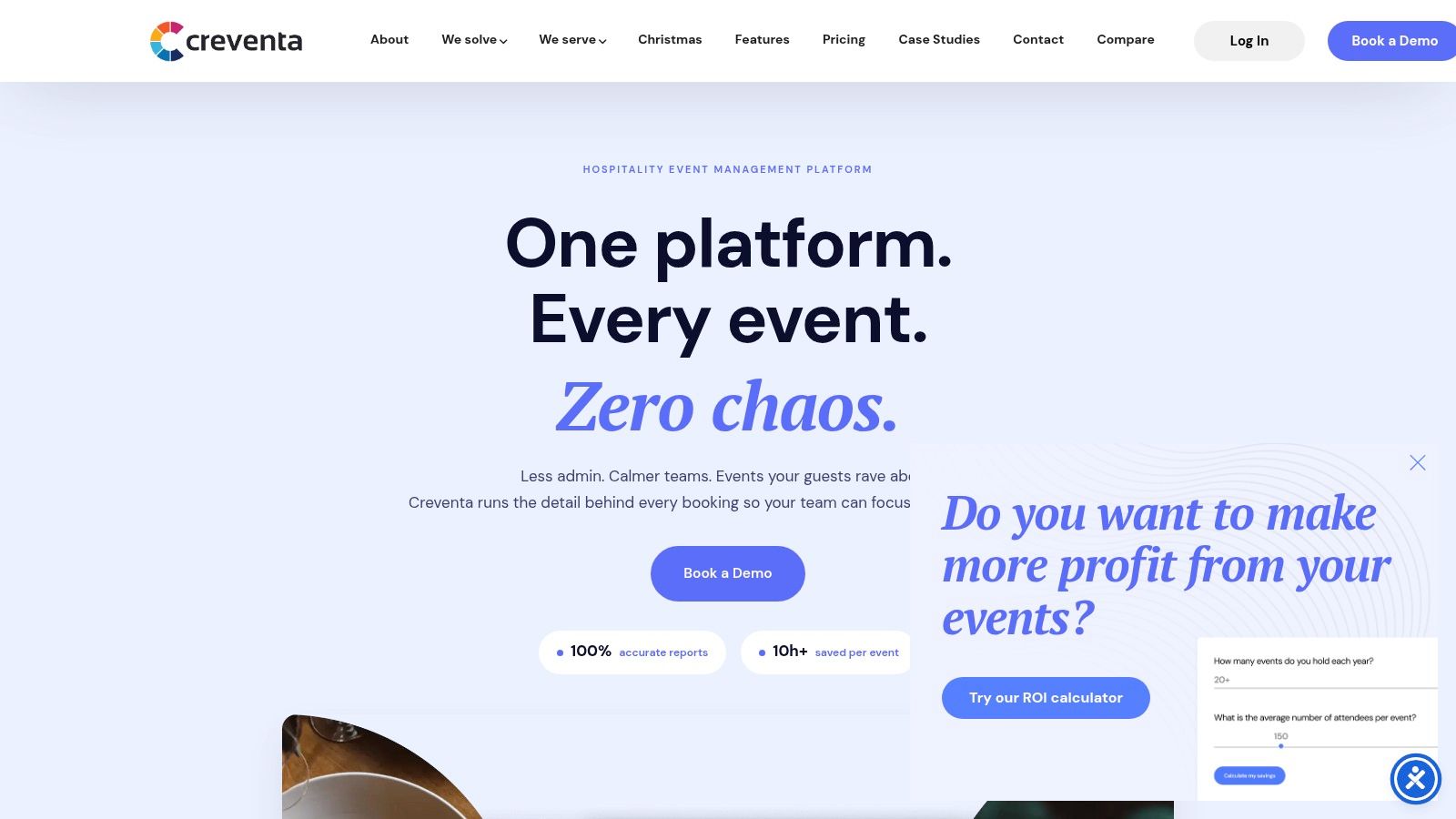
Creventa is the most hospitality-specific entry in this list. It's built around the operational mess many venues already know too well: spreadsheets for seating, separate tools for payments, email systems for reminders, and manual back-and-forth for menu choices and dietary details. Its pitch is simple. Put bookings, pre-orders, allergens, seating, ticketing, payments and guest communications into one white-label system.
That matters most for venues where the event sale is only half the job. Hotels, restaurants, stadiums, golf clubs and multi-site groups also need kitchen-ready output, per-guest food data and clear visibility from initial enquiry through post-event feedback. Creventa supports payments through Adyen and Stripe, alongside broader hospitality workflows like joiner events, set menus and guest-level tracking. Buyers comparing it with other hospitality tools can also review Creventa versus Tripleseat.
Why Creventa stands out
The strongest evidence in Creventa's favour is operational rather than promotional. Creventa reports reducing the planning time for a 70 to 80 guest wedding from 2 to 4 hours to about 30 minutes, a customer-reported saving of up to 87.5% for that event type in the UK, according to Creventa's comparison material. Independent company data on F6S for Creventa also says the platform typically saves hospitality venues 6 staff hours per event while helping reduce food costs through automated pre-order flows.
Those gains line up with a broader hospitality pattern. Integrated venue systems can reduce planning effort and kitchen waste when they replace fragmented tools and capture guest preferences centrally, especially where allergen and dietary compliance is part of daily execution, as outlined in Eat App's venue management software analysis.
Practical rule: If your events involve food pre-orders, allergens, seating and deposits, judge “all-in-one” by what your kitchen and ops team can run from one record, not by how many logos appear on an integrations page.
Pros and cons
Best breadth for hospitality teams: Creventa covers booking workflows, food and drink pre-orders, seating, ticketing, guest communications, dietary capture and payments in one venue-facing system.
Strong compliance fit: Its per-guest allergen and dietary tracking matches the realities of UK hospitality operations.
Fast implementation profile: Creventa reports a low-complexity setup, typically a couple of days and sometimes hours, which is a major advantage over enterprise suites with longer rollouts.
Pricing isn't public: You'll need a demo and quote.
Not every venue needs this much: A very small pub or occasional private-hire site may prefer a lighter tool if pre-orders and compliance workflows aren't central.
Best for: hospitality venues that need real all-in-one execution, not just enquiry management. That includes hotels, restaurant groups, stadium hospitality and multi-site operators that care about rollout speed.
2. Tripleseat
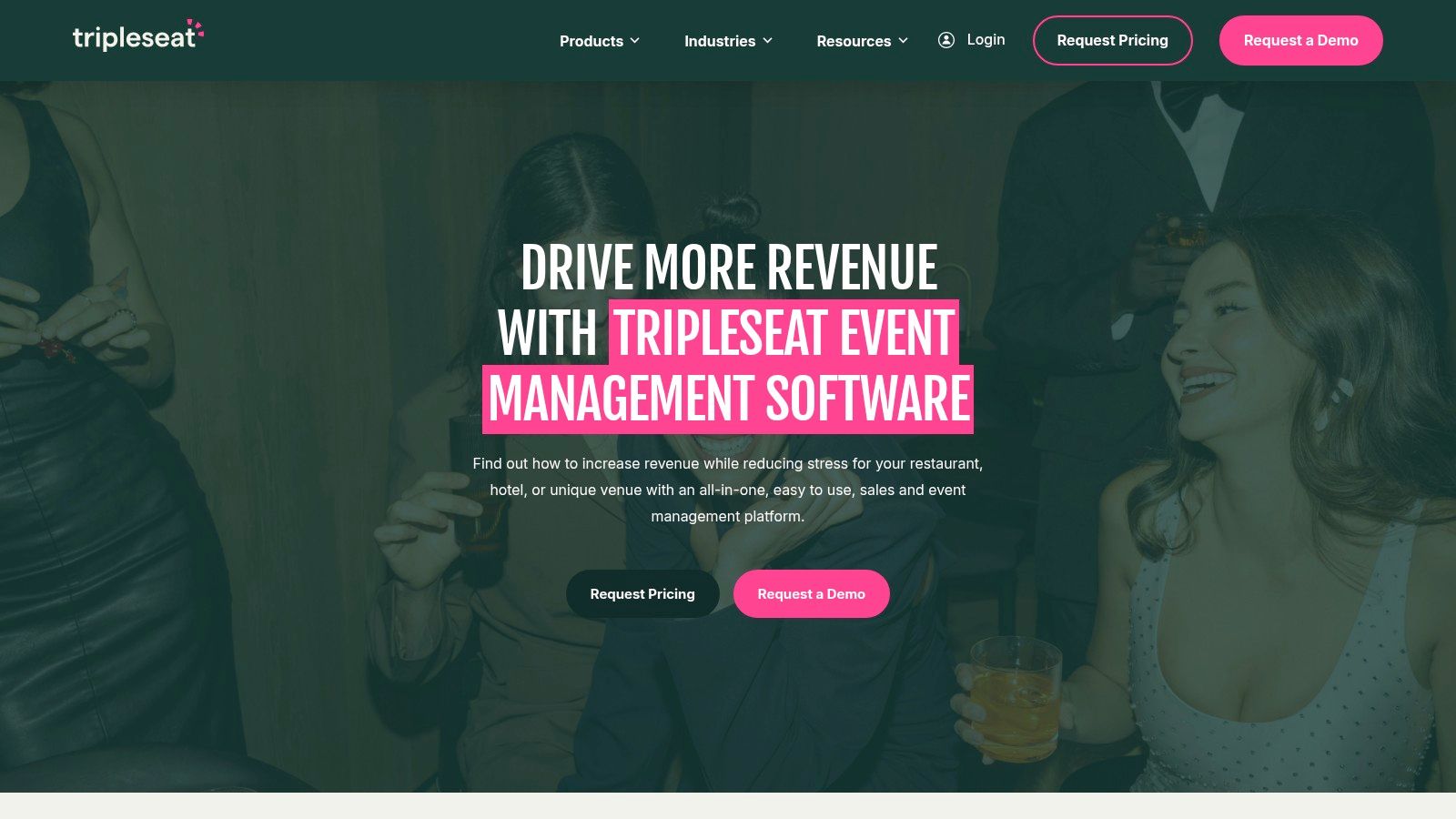
Tripleseat has earned its place by staying focused on hospitality workflows. It's designed for venues that want the journey from lead capture to contract, floor plan, BEO and payment to happen in one product family. For restaurants, hotels and private event venues, that's often the difference between a sales tool and an actual operations system.
Its appeal is maturity. Tripleseat offers enquiry management, booking calendars, guest-facing booking tools, e-signatures, payments, ticketing, and 2D or 3D floor plans. It also has hotel-specific options, which helps mixed-use properties that sell rooms and event space together.
Where Tripleseat fits best
Tripleseat is usually strongest when a venue wants broad hospitality coverage without stepping fully into enterprise complexity. It suits teams that run a steady stream of weddings, private dining, corporate events and seasonal functions, and want one platform to standardise the process.
Tripleseat is a good middle ground for venues that have outgrown generic CRM and e-sign tools, but don't want a heavyweight enterprise deployment.
The trade-off is that it can feel like a lot of system for smaller venues. Pricing is quote-based, and as with many platforms in this category, buyers should probe what's native versus what depends on add-ons or external systems.
Pros
- Hospitality workflow depth: Strong enquiry-to-BEO coverage.
- Useful self-serve options: Direct booking can help smaller teams reduce manual back-and-forth.
Cons
- No public pricing: Budget planning starts with a sales conversation.
- Can be complex for simpler venues: Not every operator needs the full workflow stack.
Website: Tripleseat
Best for: UK hospitality venues that want end-to-end sales-to-operations coverage and can handle a more structured platform.
3. Cvent Event Management Suite
Cvent sits at the enterprise end of the market. It's less a single venue tool than an event management ecosystem, with modules spanning venue sourcing, registration, marketing, onsite check-in, badging, CRM and analytics. If your operation looks global, highly standardised, security-heavy or procurement-led, Cvent makes sense fast.
For venue teams, Cvent's value depends on what kind of events you run. If the priority is large conferences, delegate registration and enterprise reporting, it's one of the strongest options here. If the priority is pre-ordered hospitality, kitchen coordination and guest-level food detail, it may be broader than necessary.
Where Cvent earns its place
The biggest differentiator isn't feature count. It's organisational fit. Cvent works best where multiple departments, formal approvals and complex reporting matter more than speed of setup. For a useful comparison with hospitality-focused alternatives, see event software for hotels and venues.
There's also an implementation reality buyers shouldn't ignore. Heavyweight suites like Cvent take much longer to roll out than low-complexity hospitality platforms. That matters if you need a system live before a peak season rather than after a long onboarding cycle. As a baseline, major UK events with over 1,000 attendees are often planned over 12 to 18 months, which helps explain why enterprise event stacks tend to align better with long-horizon programmes than venue teams needing fast execution.
Pros
- Enterprise-grade breadth: Strong module ecosystem and global support.
- Capable for large programmes: Registration, sourcing and onsite tools are especially mature.
Cons
- Lengthy implementation: It's rarely a quick switch-on.
- Quote-based licensing: Costs can rise with modules and complexity.
Website: Cvent
Best for: large venues, conference operators and enterprise event teams that need advanced registration, sourcing and analytics.
4. Momentus Technologies formerly Ungerboeck
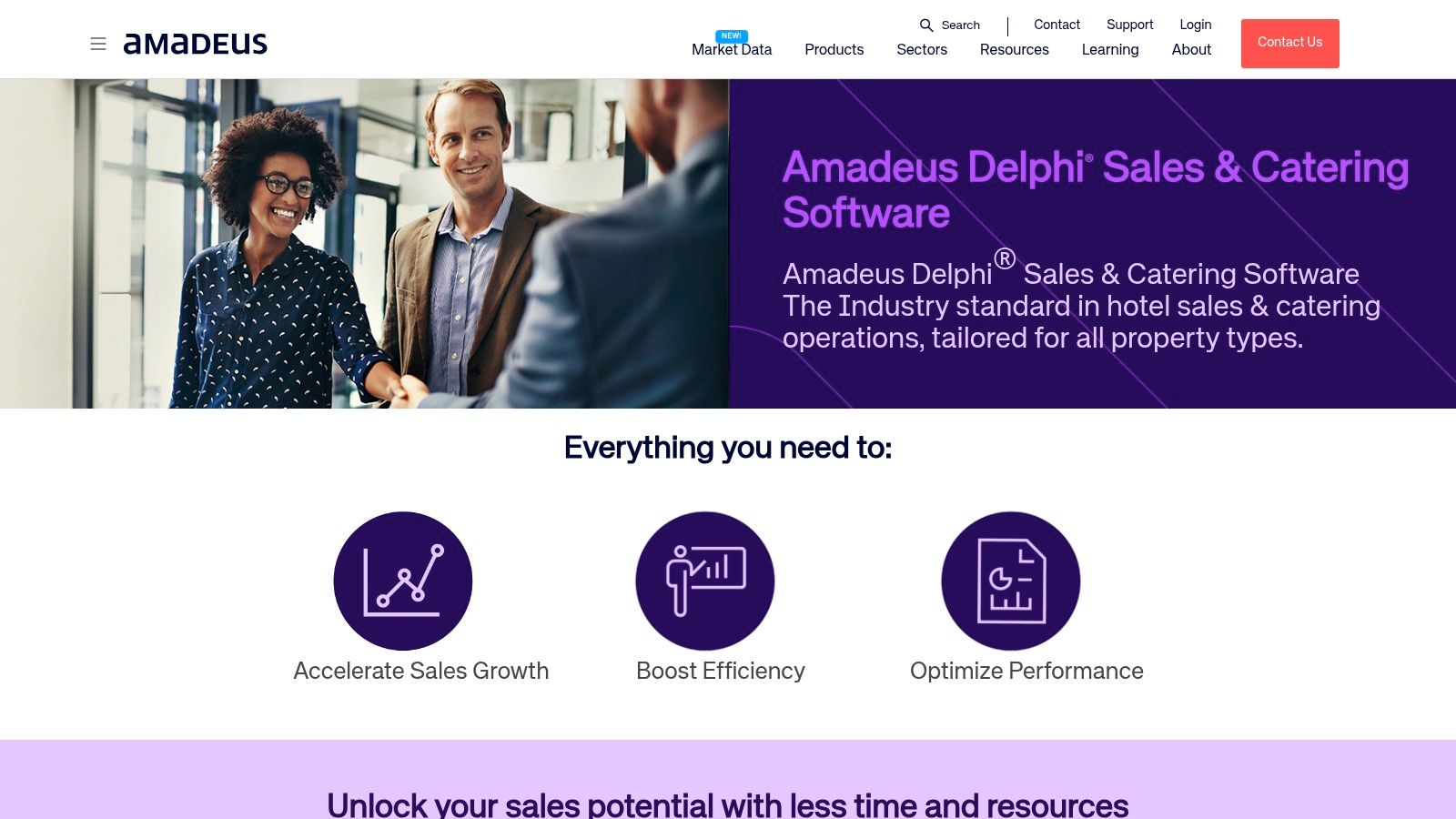
Momentus Technologies is what you shortlist when your venue operation looks more like infrastructure than simple event sales. Convention centres, arenas, performing arts venues and large stadium estates often need work orders, service management, financial controls and operational coordination across multiple spaces. That's where Momentus has a clear advantage.
Its legacy as Ungerboeck still matters. Buyers know it as a serious platform for serious venues, especially those with layered approvals, technical services, tenant-style relationships and complex booking inventories.
Best fit for operational complexity
Momentus is less about convenience and more about control. It can support end-to-end venue operations, CRM, services orders and financial workflows in a way lighter hospitality tools usually don't. Teams evaluating seating-heavy event operations may also want to compare dedicated options in this guide to event seating plan software.
The downside is predictable. Complexity brings training overhead, implementation work and a buyer profile that usually skews toward larger organisations with dedicated systems teams.
When a venue runs multiple halls, technical crews, service orders and strict financial workflows, “all-in-one” means operational governance as much as guest experience.
Pros
- Designed for complex estates: Strong for multi-space, compliance-heavy operations.
- Enterprise deployment support: Suitable for venues that need custom rollout and integration work.
Cons
- High training requirement: Smaller teams may struggle to extract value quickly.
- Pricing fits enterprise buyers: It won't be the easiest option for cost-sensitive venues.
Website: Momentus Technologies
Best for: convention centres, arenas, stadiums and performing arts organisations with complex internal operations.
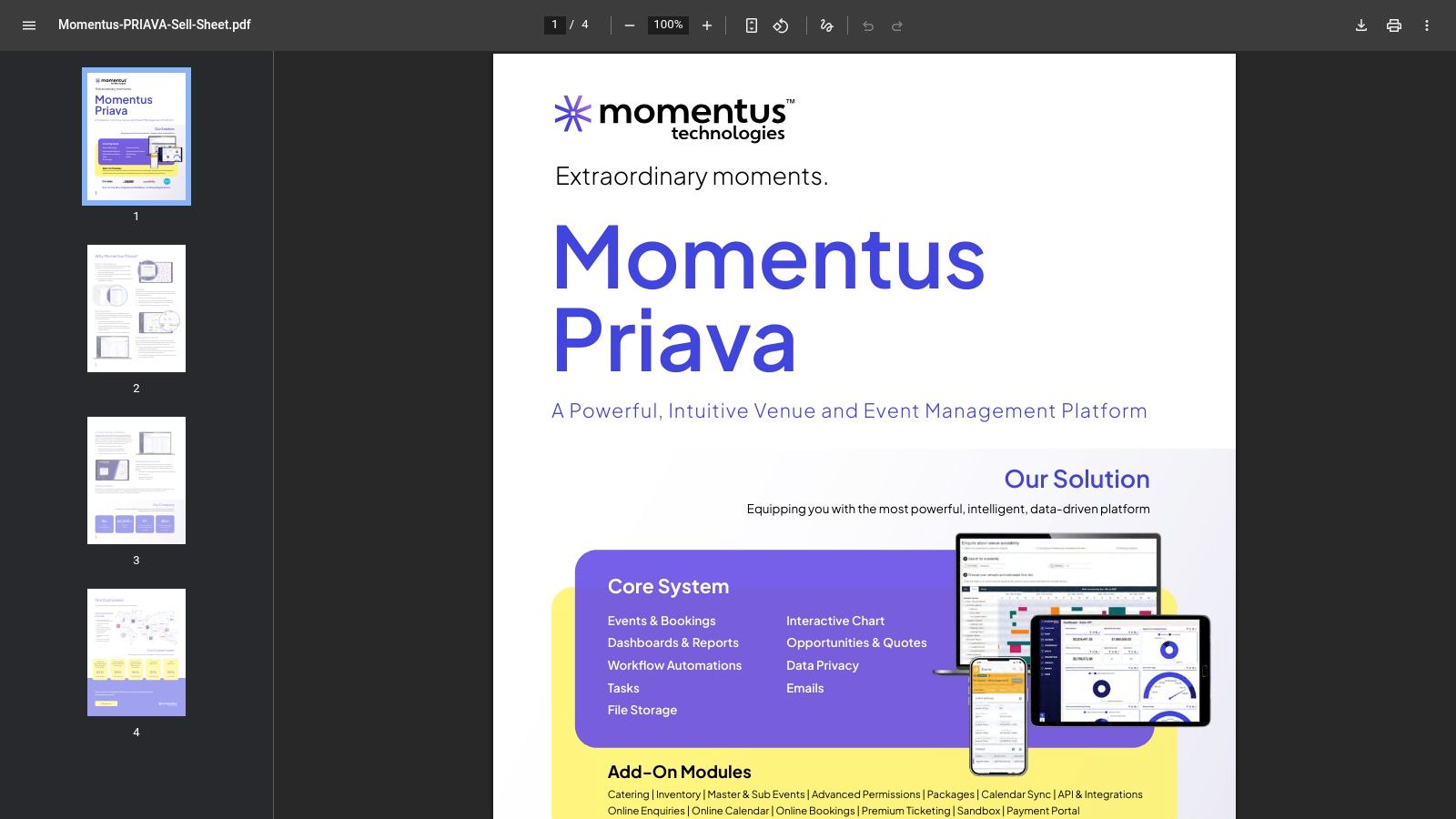
5. Amadeus Delphi Sales and Catering
Amadeus Delphi is one of the clearest hotel-first products on this list. It's built for meetings and events teams that sell group business, room blocks and event space together, then need proposals, contracts and BEO-style workflows to stay aligned with the wider property operation.
That hotel alignment is its strength. If your venue is part of a lodging business, Delphi understands the commercial reality better than many general event platforms. Sales teams, revenue leaders and M&E staff often need one view of groups, accommodation and function activity.
Where Delphi is strongest
Delphi works best in hotels and multi-property groups where the event system must fit an existing hospitality stack rather than replace it. That also means it may be less attractive to restaurants, pubs, stadium hospitality teams or standalone venues with no room inventory.
For buyers where dietary and allergen execution is central, not peripheral, it's worth comparing Delphi's workflow style against tools designed specifically for guest-level F&B detail, including allergen and dietary tracking software for events.
Pros
- Deep hotel focus: Strong match for M&E teams inside lodging operations.
- Recognised enterprise option: Well suited to groups that already use large hospitality systems.
Cons
- Less natural for non-hotel venues: Standalone event businesses may find it too property-centric.
- Implementation can be lengthy: As with other enterprise suites, deployment is a project.
Website: Amadeus Delphi
Best for: hotels and hotel groups that need meeting and events software tightly aligned with group and room-block workflows.
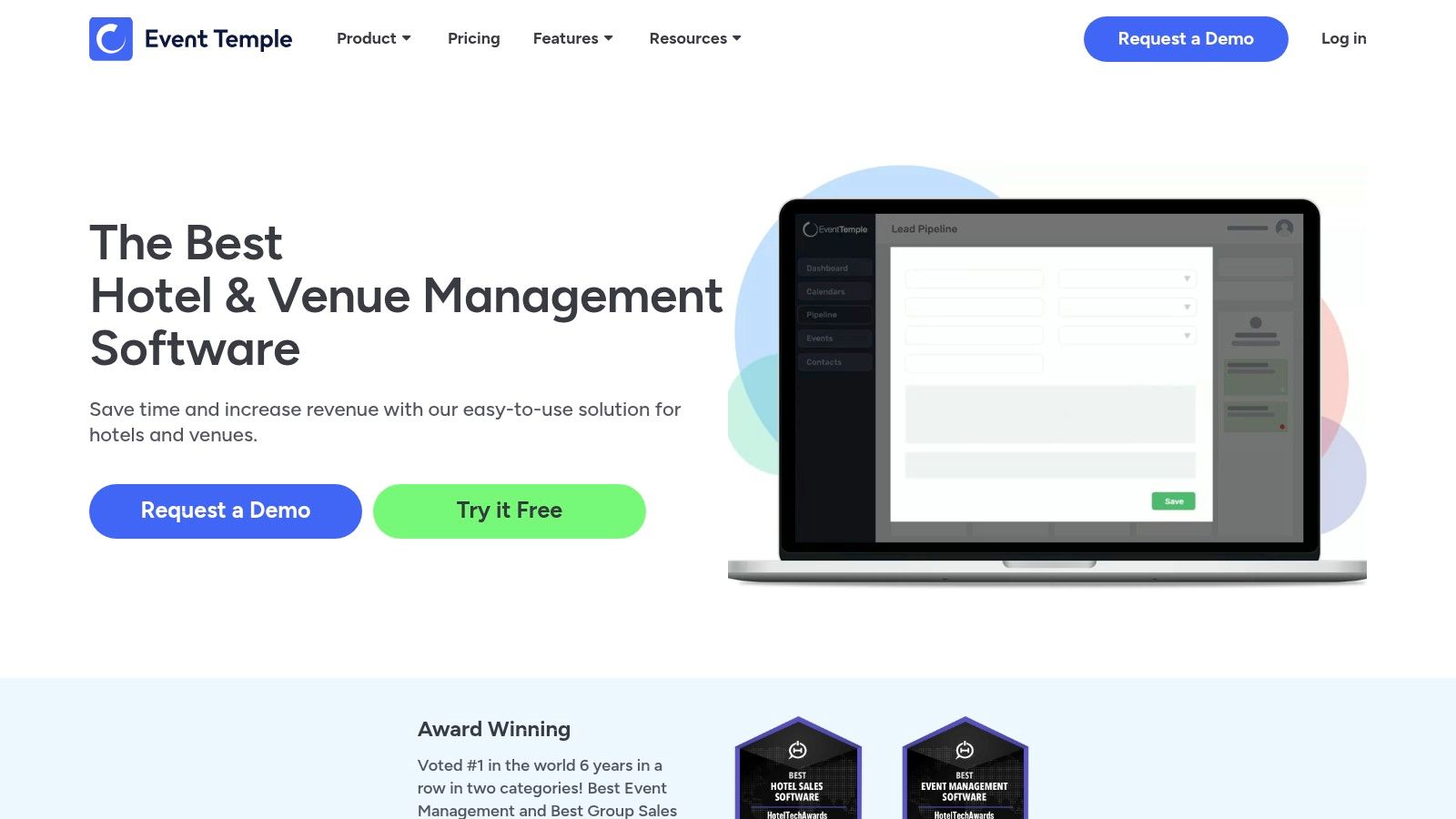
6. Event Temple
Event Temple has built a following by doing something many enterprise tools don't. It makes setup and day-to-day use feel manageable. For single-site hotels, boutique groups and mid-sized chains, that's often more valuable than the broadest possible module list.
Its toolkit covers CRM, web forms, proposals, invoicing, payments and PMS integrations, with multi-property capabilities for growing groups. The buying appeal is straightforward: cleaner user experience, faster onboarding and more visible pricing guidance than many quote-only competitors.
Why buyers shortlist it
Event Temple is a good option when you want a modern hotel sales and catering platform without taking on a sprawling enterprise implementation. It also speaks to a market frustration around hidden cost and integration complexity. Many venue buyers still discover late that “all-in-one” doesn't always mean native reporting or straightforward integration, a gap discussed earlier in the wider UK market.
For hospitality teams trying to reduce manual admin and avoid tool sprawl, software in hospitality that streamlines operations and minimises errors is a useful comparison lens.
- Best reason to buy: More approachable setup and UI than many enterprise alternatives.
- Best caution: Advanced functionality may depend on higher tiers or add-ons.
- Best fit: Hotels that want a modern operating layer without overcommitting to enterprise complexity.
Website: Event Temple
Best for: single-site to mid-chain hotels that value speed, usability and clearer pricing signals.
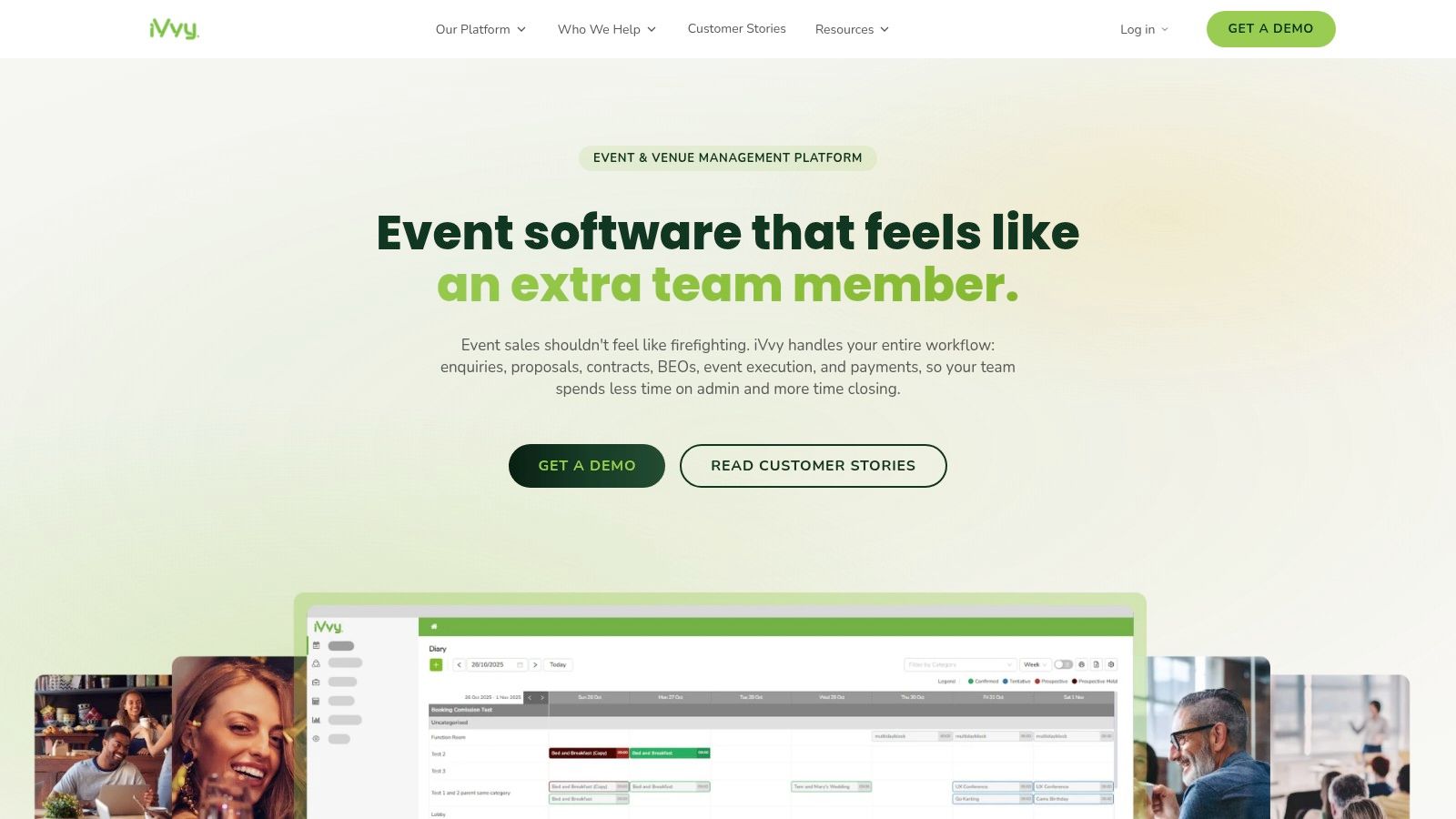
7. iVvy Venue Management
Need one system to handle venue hire, catering, accommodation and ticketed events without forcing a full enterprise rollout on day one? iVvy is one of the clearer options for that use case.
Its product strategy is modular. Buyers can combine venue management, online bookings, catering workflows, ticketing and payments through iVvyPay, rather than replacing every process at once. That approach suits venues with mixed revenue streams, especially hospitality groups balancing private functions with public events.
Best viewed through implementation speed
iVvy makes the most sense for operators who value phased adoption more than maximum depth in every module. A hotel group or multi-use venue can start with core booking and sales workflows, then add ticketing or payment capability as operational needs become clearer. That reduces change risk compared with a large enterprise suite, but it also puts more pressure on buyers to test how well reporting, permissions and cross-property oversight work in their own setup.
That trade-off matters. Modular systems often reach value faster for mid-sized teams, yet they can create uneven visibility if different sites adopt different parts of the stack.
Where it fits, and where to push harder in demos
iVvy is strongest for venues that need commercial flexibility. If your business sells conference space on weekdays, weddings on weekends and ticketed experiences at other times, having those revenue lines in one vendor ecosystem is a practical advantage.
The caution is less about feature absence and more about management discipline. Groups with finance-heavy reporting requirements, complex approval chains or strict multi-site standardisation should examine dashboards, exports and roll-up reporting carefully before signing. In that sense, iVvy sits between niche venue tools that are fast to launch and enterprise suites that offer tighter control but usually take longer to implement.
Pros
- Modular product design: Easier to phase in than a large all-at-once deployment.
- Good fit for mixed venue models: Supports bookings, catering, accommodation and ticketed activity in one system family.
Cons
- No public pricing: Budget planning starts with sales conversations.
- Reporting depth needs validation: Multi-property groups should test roll-up visibility and admin controls in detail.
Website: iVvy
Best for: multi-use venues and growing groups that want faster implementation than an enterprise suite, and can accept some diligence work around reporting before rollout.
8. Planning Pod
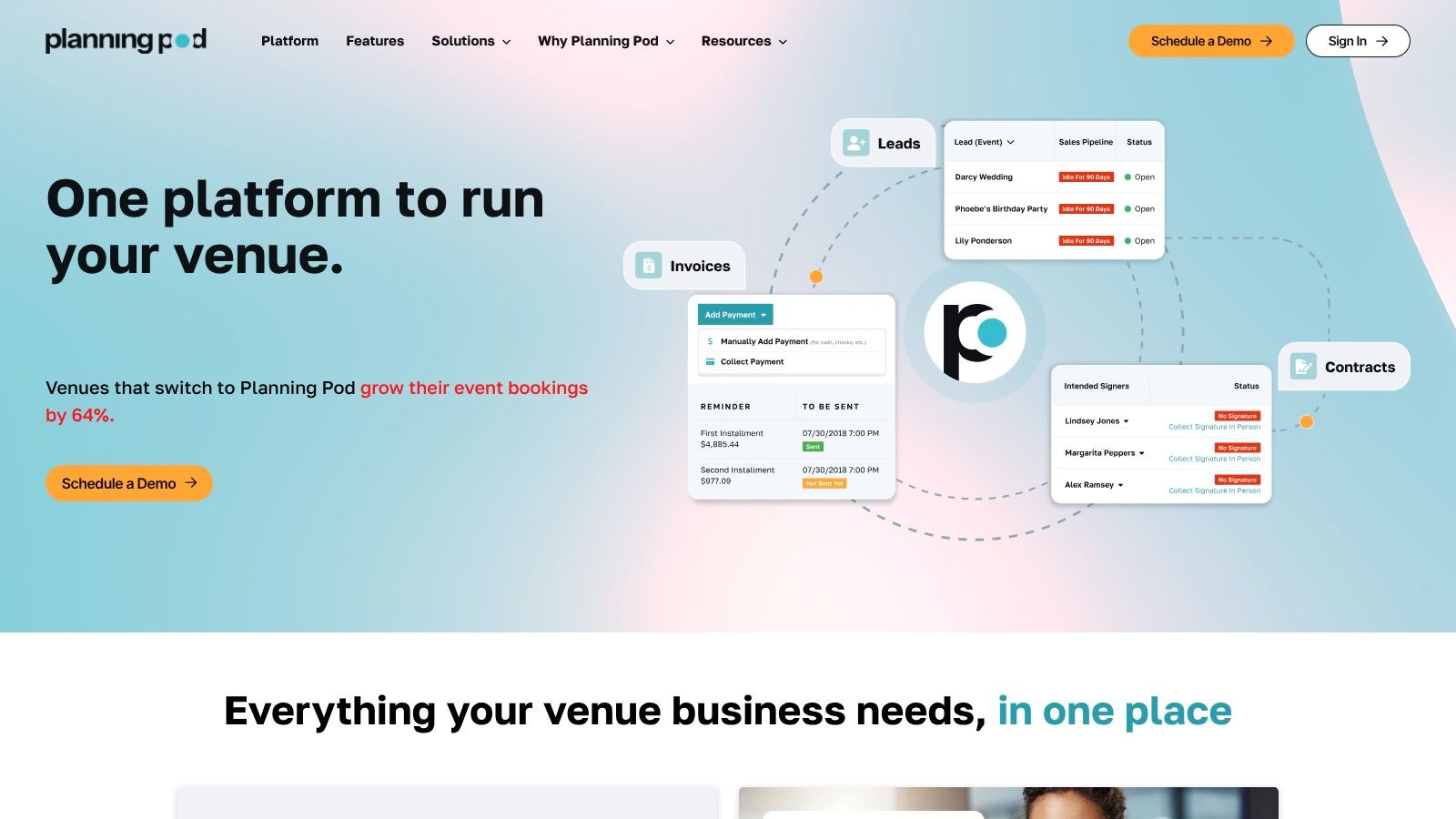
Planning Pod is a practical mid-market choice. It covers the core venue workflow many operators need: CRM, bookings, proposals, contracts, e-signatures, invoicing, seating plans, BEOs and registration. It doesn't try to look like enterprise software, and that's part of its appeal.
This is the kind of product that often works well for wedding venues, event spaces and country clubs that need structure but not a huge transformation project. Transparent monthly pricing also gives it an advantage with buyers tired of quote-led discovery.
Mid-market practicality
Planning Pod's sweet spot is the operator who wants one coherent system with human onboarding support, but doesn't need the scale posture of Cvent or Momentus. Its integrations with tools like QuickBooks and wedding marketplaces also make sense for businesses where lead flow and finance administration are part of the same operational bottleneck.
Buyers who want predictable costs often end up choosing slightly less software on paper, because hidden integration fees can wipe out the value of a larger suite.
Pros
- Clearer pricing than many rivals: Easier to shortlist on budget.
- Good operational coverage: Seating, contracts and registration in one place.
Cons
- Payment processing may require change management: Especially for teams with fixed finance processes.
- Not built for the very largest estates: Multi-layer enterprise environments may outgrow it.
Website: Planning Pod
Best for: mid-market wedding venues, country clubs and event spaces that want breadth, support and budget clarity.
9. EventPro
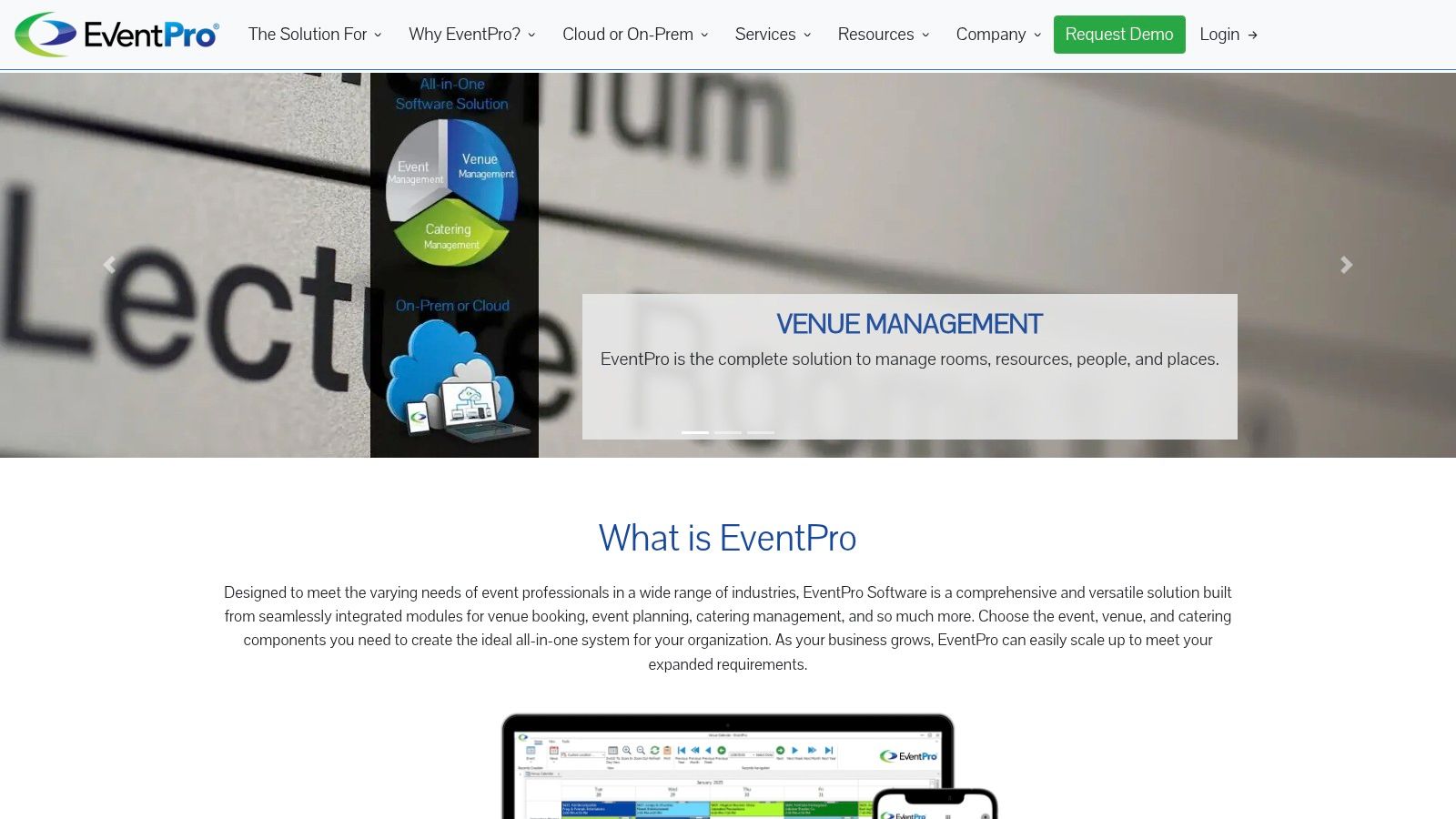
EventPro is one of the few options here where catering depth is a central selling point rather than a supporting module. For venues where menus, equipment, room setup and F&B pricing drive operational complexity, that matters more than polished marketing pages.
Its unified database spans clients, rooms, menus and equipment, and the platform is available as cloud or on-premise. That deployment choice still matters for organisations with IT constraints or internal hosting preferences.
Catering depth first
EventPro is strongest when food and beverage operations are complicated enough to justify a more traditional system. Clubs, country houses and venues with layered catering logic may prefer that depth to a lighter SaaS interface.
The trade-off is user experience. Teams used to newer SaaS products may find EventPro less intuitive at first, and quote-based modular pricing means buyers need a careful scope discussion before comparing it with simpler all-in-one venue tools.
Pros
- Deep catering capability: A serious option for F&B-heavy venues.
- Deployment flexibility: Cloud and on-premise can suit different IT policies.
Cons
- More traditional interface: Adoption may take longer for non-technical teams.
- Modular pricing takes unpacking: Cost comparison isn't always immediate.
Website: EventPro
Best for: clubs, country houses and venues where granular catering control outweighs the need for the most modern interface.
10. Perfect Venue
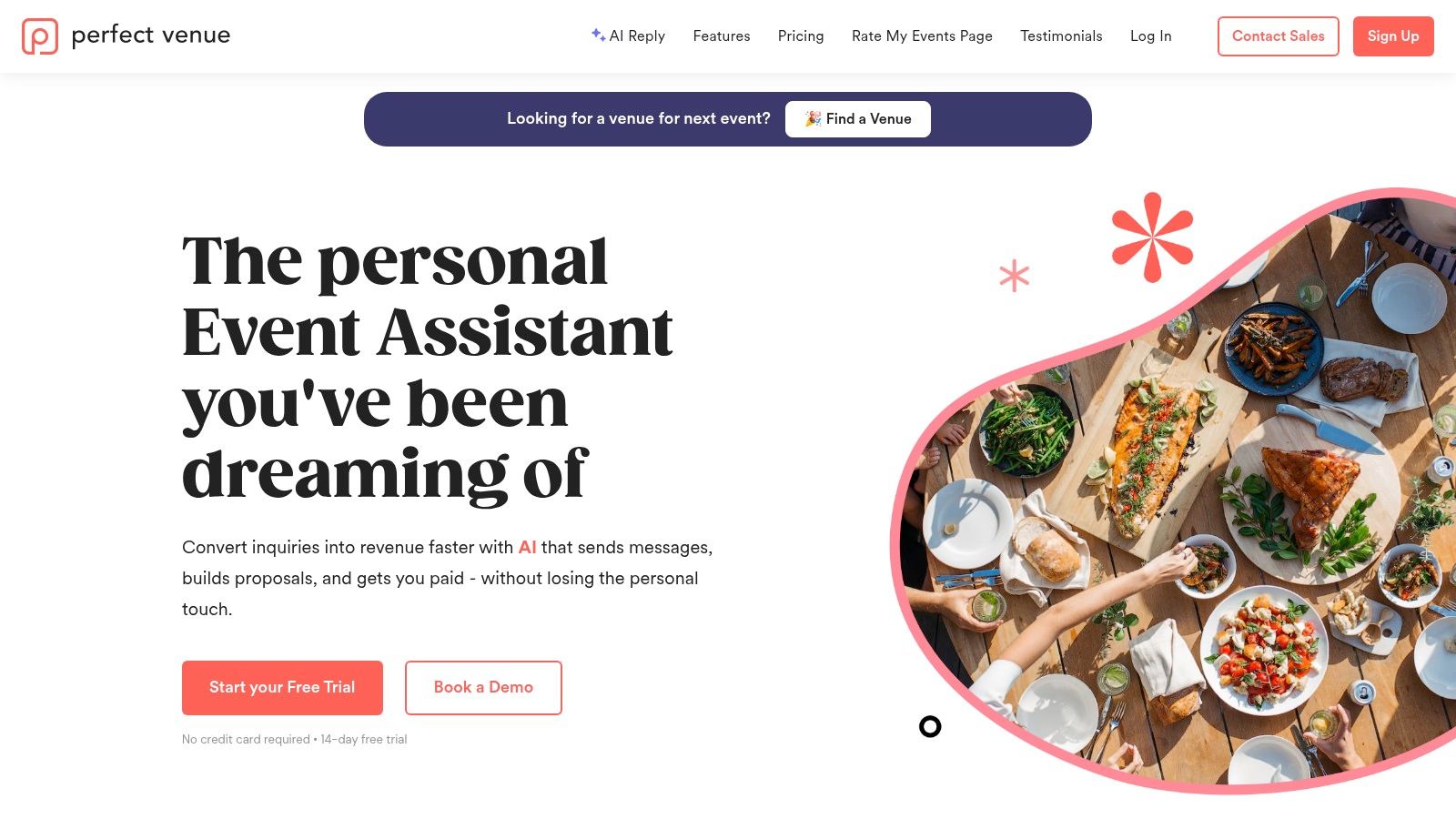
Perfect Venue is the lightweight end of this list, and that's not a criticism. For restaurants, pubs, breweries and small groups, simpler software often wins because teams can learn it quickly, keep costs predictable and avoid overbuying.
It focuses on lead capture, proposals, contracts, guest portals, BEOs, automations, analytics and menu upsells. If your venue doesn't need deep enterprise controls or highly specialised workflows, that can be exactly the right scope.
Best for simplicity and cost clarity
Perfect Venue is also notable because public entry pricing exists, which remains uncommon in this market. In the UK software discussion referenced earlier, vendor guides often cite starting prices such as Perfect Venue at $59 per month, but buyers still need to ask what integration work sits outside that starting point when local systems are involved.
That's the core trade-off. Perfect Venue is approachable and intentionally smaller in scope. If you run pure high-volume ticketing, a dedicated ticketing platform may still suit you better. If you run complex hospitality operations across multiple sites, you may outgrow it.
Pros
- Accessible pricing signals: Easier for SMB venues to evaluate.
- Quick to learn: Good for lean teams that need fast adoption.
Cons
- Smaller feature set by design: That simplicity has limits.
- Advanced needs push you upmarket: Multi-site complexity may require a broader platform.
Website: Perfect Venue
Best for: SMB venues that want an approachable all-in-one tool with clearer pricing and faster day-to-day usability.
Top 10 All-in-One Venue Event Software Comparison
| Product | Core features (✨) | UX & Quality (★) | Value & Pricing (💰) | Best for (👥) |
|---|---|---|---|---|
| Creventa 🏆 | All‑in‑one AI-first: pre-orders, seating, allergens, ticketing, payments, instant docs ✨ | Fast setup; ~70% planning effort reduction; 99.8% email deliverability ★★★★★ | Strong ROI (revenue lift/waste reduction); demo/quote required 💰 | Hotels, restaurants, stadiums, golf clubs, multi-site operators 👥 |
| Tripleseat | RFP→BEO workflows, floor plans, ticketing, Direct Book ✨ | Mature, proven UK adoption; comprehensive features ★★★★ | Quote-based pricing; enterprise feature set 💰 | Restaurants, hotels, unique venues 👥 |
| Cvent | Venue sourcing, registration, onsite check‑in, CRM & analytics ✨ | Enterprise-grade security & support; complex implementation ★★★ | High-cost, quote-only; built for scale 💰 | Large-scale venues, global enterprises 👥 |
| Momentus Technologies (Ungerboeck) | End‑to‑end operations: CRM, financials, work orders, large integrations ✨ | Built for high-volume multi-space venues; substantial training ★★★ | Quote pricing; heavy‑duty enterprise investment 💰 | Convention centres, arenas, stadiums 👥 |
| Amadeus Delphi | Hotel sales & catering: leads, proposals, contracts, BEOs ✨ | Deep hotel focus; recognised brand; implementation time variable ★★★★ | Quote pricing; tailored to hotel groups 💰 | Hotels and multi‑property groups 👥 |
| Event Temple | Hotel CRM, web forms, e-proposals, invoicing, PMS integration ✨ | Fast setup, streamlined UI; chain tools for multi-property ★★★★ | Transparent "starting from" pricing; good mid-market value 💰 | Single-site to mid-chain hotels 👥 |
| iVvy Venue Management | Space sales, ticketing (iVvyPay), modular stack, PMS integrations ✨ | Modular flexibility; active UK presence ★★★★ | Quote-based; add modules as needed 💰 | Venues needing modular ticketing/catering options 👥 |
| Planning Pod | CRM, proposals/contracts, seating, BEOs, registration & integrations ✨ | Emphasis on live onboarding and support; SMB friendly ★★★★ | Transparent monthly tiers; strong onboarding value 💰 | Wedding venues, event spaces, country clubs 👥 |
| EventPro | Unified DB for clients/menus, deep catering controls, Cloud/On‑Prem ✨ | Exceptional catering depth; traditional UI and onboarding ★★★ | Quote pricing; modular component costs 💰 | Clubs, country houses, catering‑centric venues 👥 |
| Perfect Venue | Lightweight CRM, guest portal, proposals, automations, upsells ✨ | Quick to learn; fast setup; free trial available ★★★★ | Clear public tiers & predictable costs 💰 | SMB restaurants, pubs, breweries and small groups 👥 |
Choosing the Right All-In-One Solution for Your Venue
The best all-in-one venue event software depends less on brand recognition and more on operating model. A hotel group selling room blocks and meetings has different needs from a stadium hospitality team, which has different needs again from a wedding venue or brewery taproom. Buyers get better outcomes when they choose by venue profile and implementation speed, not by who claims the biggest feature list.
Start with workflow reality. If your team needs ticketing, registration and enterprise reporting above all else, Cvent is a serious contender. If you run convention-scale operations with work orders, services and complex financial control, Momentus belongs on the shortlist. If you're a hotel-first M&E team, Delphi and Event Temple make more sense than tools built primarily for independent event venues.
Hospitality execution is where the list starts to split. Tripleseat and Creventa both fit venues that need broader enquiry-to-event coverage. The difference is emphasis. Tripleseat is a mature hospitality platform with strong sales-to-BEO workflow coverage. Creventa is the stronger fit when guest pre-orders, allergen tracking, seating, payments and fast implementation are central to the operation, not side features. Creventa also presents the clearest case for venues trying to replace spreadsheets and disconnected point tools with one branded system.
Implementation speed should be treated as a buying criterion, not an afterthought. A platform that takes months to roll out may still be the right answer for an enterprise programme. It's the wrong answer for a venue group that needs operational change before the next busy season. That's one reason lighter or hospitality-specific tools often outperform bigger suites in real venue environments. They don't just promise breadth. They get live sooner.
Cost transparency also deserves harder scrutiny. Public starting prices help, but they don't answer the bigger question of what's native and what requires add-ons, custom development or third-party connectors. Ask vendors to show the exact workflow for payments, PMS sync, cross-site reporting, dietary capture, kitchen output and guest communications. If the answer depends on several extra tools, the platform may be broad, but it isn't really all-in-one for your venue.
One final caution. If your operation is pure high-volume ticketing with minimal hospitality complexity, a dedicated ticketing platform may be the better fit. Not every venue needs deep pre-ordering, seating or BEO workflows. But if food, tables, allergens, deposits and post-booking guest management drive the work, the right suite can remove a large amount of manual administration and reduce execution risk.
For wider thinking on event communication and AI-supported operations, Wispra offers AI event insights.
If your venue needs one system for enquiries, pre-orders, seating, allergens, payments and guest communications, Creventa is worth a close look. It's especially strong for hospitality teams that want fast implementation and less reliance on spreadsheets, point tools and manual admin.