Beyond Spreadsheets: Mastering Allergen Safety at Your Events
A single forgotten email or a hastily updated spreadsheet is all it takes to turn a celebratory event into a medical emergency. In practice, that risk rarely starts with the plated dish alone. It starts when guest information sits in too many places, when dietary preferences get mixed up with medical allergies, or when front-of-house and kitchen teams work from different versions of the truth.
In the UK, that backdrop matters. The Food Standards Agency guidance requires food businesses to make allergen information clear, detailed, accurate, and available in writing, with allergenic ingredients emphasised in the ingredient list, and staff properly trained to manage allergens, as reflected in current UK allergen guidance. Natasha's Law, which came into effect on 1 October 2021, added another layer for foods prepacked for direct sale, requiring full ingredient lists with the 14 mandatory allergens emphasised, as explained by Anaphylaxis UK's overview of Natasha's Law.
That's why the best allergen and dietary tracking software for events isn't just a menu database or a prettier spreadsheet. It needs to carry one guest's disclosure all the way through RSVP, menu choice, seating, kitchen prep, labels, service, and due diligence records. If your current process breaks at any point, you're relying on memory and goodwill.
If you're tightening up intake and guest data before the event even reaches catering, this guide on client intake form content is a useful companion read.
Table of Contents
- 1. Creventa
- 2. Kafoodle
- 3. Nutritics
- 4. Apicbase
- 5. CaterCloud
- 6. Erudus
- 7. Spoonfed
- 8. Kobas
- 9. zkipster
- 10. CaterSOFT
- Top 10 Event Allergen & Dietary Tracking Software Comparison
- Future-Proofing Your Event Allergen Management
1. Creventa
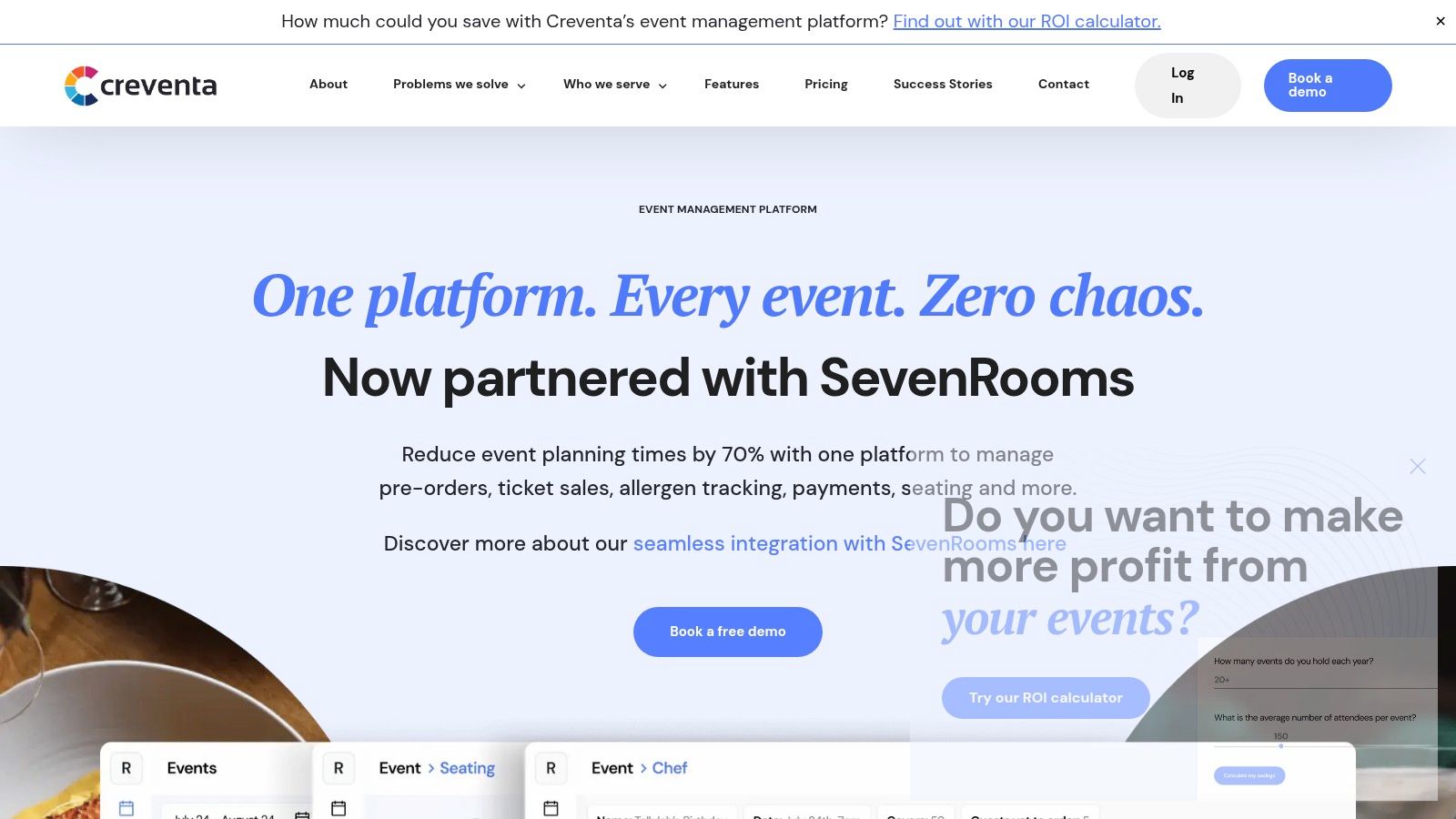
A common failure point at events happens five minutes before service. The sales team has the guest's allergy note in one system, the seating plan sits in another, and the kitchen briefing has been rebuilt by hand. That is how a declared risk turns into an operational mistake.
Creventa fits venues that need allergen handling built into the event workflow itself. It captures the 14 mandatory allergens and custom dietary requirements, lets guests submit their own information, separates allergies from preferences, and carries those flags through to place cards, table plans, and chef-facing reports. For teams working under UK compliance pressure, that matters more than a long feature list. The ultimate measure is whether guest data moves cleanly from enquiry and pre-order through to front-of-house service and kitchen execution.
Why Creventa stands out
Creventa's strength is workflow control. It combines pre-orders, seating, ticketing, payments, communications, and reporting in one venue-focused system, so staff are not rekeying dietary details across multiple tools. In practice, that reduces the two risks I see most often in hospitality operations: missed updates and conflicting versions of the same guest record.
The compliance context is not theoretical. The Food Standards Agency says around 2 million people in the UK are living with a diagnosed food allergy, which is about 3% of the population, and the figure is higher in children. Its allergy and intolerance guidance is the baseline many operators work from when reviewing risk and service procedures (Food Standards Agency allergy guidance). A separate review from Foods Connected notes that centralised pre-order systems with allergen capture can reduce allergen-related errors in documented event planning scenarios by up to 70% (Foods Connected's review of food allergy app context).
That is the point of this category. Good software should not stop at data capture. It needs to turn a guest declaration into a kitchen-ready output, a clear front-of-house briefing, and an audit trail you can stand behind if an incident is questioned later.
For venue teams tightening their process before a busy events season, this allergen compliance checklist for hotel event pre-orders is a useful reference point. It reflects the operational gap many teams still have between collecting information and using it properly during service.
Practical rule: If staff have to export guest dietaries from one platform and rebuild them in another, the control process is too weak for high-risk events.
There is also a wider industry issue. Consumer allergy tools get attention, but event teams need something different: a system that links guest disclosure, function sheets, kitchen reporting, and service delivery. That risk gap is examined well in this piece on regulatory change and event allergy safety.
Pros and cons
- Best for: Hotels, multi-site venues, stadium hospitality teams, and event-led restaurants that want one system from enquiry through to service.
- Pros: Strong end-to-end event workflow. Guest self-submission cuts admin chasing. The separation between preferences and allergies is practical, especially for banqueting teams handling large tables with mixed requirements.
- Pros: Creventa says its platform can deliver up to 70% lower planning effort, up to 20% lower food waste, and a 99.8% transactional email delivery rate, based on its own product materials (Creventa product claims and metrics). Treat those as vendor-stated outcomes and test them against your own operating model.
- Cons: Pricing is not public, so smaller venues will need a sales discussion before they can judge fit. Teams outside the UK should also check how local allergen rules and label requirements map to the default setup.
2. Kafoodle
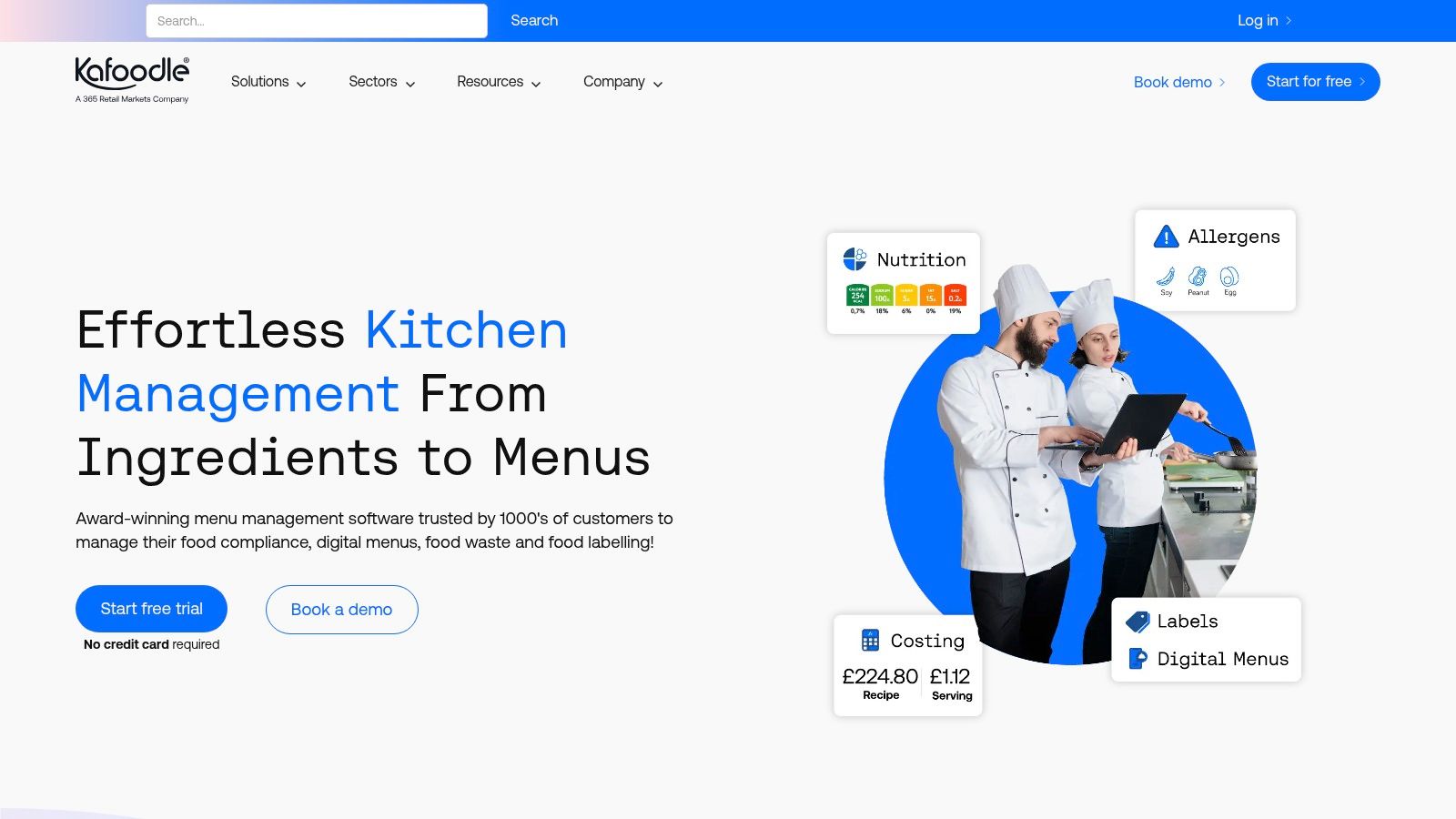
An event chef updates a canapé recipe on the morning of service. Front of house still has yesterday's allergen sheet. That is the kind of gap that creates real risk, and it is exactly the type of operational problem Kafoodle is built to reduce.
Kafoodle suits venues where allergen control starts in the kitchen and needs to flow outward into menus, labels, and service documents. If the main challenge is keeping recipe data accurate across changing menus, temporary staff, and PPDS items, it is a strong UK-focused option. It is less suited to teams that need one system to collect guest dietaries, manage seating, and coordinate pre-orders at event level.
Where Kafoodle fits best
Kafoodle brings recipe management, allergen data, menu publishing, nutritional analysis, costing, ordering modules, and PPDS label printing into one kitchen-led workflow. For operators dealing with Natasha's Law, that matters because the compliance burden usually starts with ingredients, substitutions, and version control, not with the guest-facing interface. If chefs and managers cannot trust the master recipe record, every later step gets harder.
That kitchen-first model works well for contract caterers, education sites, workplace dining, and venues with a high volume of pre-packed or semi-standardised items. It also helps event teams that need a single source of truth for dish composition, then want to pass clean data into service plans or a separate guest capture tool. Teams comparing kitchen systems with event-facing workflows should also review food pre-order systems for hotels and venues, because the handoff between guest disclosure and kitchen execution is often where software stacks start to split.
FoodCore reports a rise in digital allergen software adoption among UK food businesses since 2022 in its discussion of allergen management software in the UK. The same source also attributes integrated allergen workflows to reductions of up to 20% in kitchen waste and up to 70% time savings in planning for multi-site operators. Those figures are useful as directional evidence, but they should still be tested against your menu complexity, recipe discipline, and site count.
Guest inclusivity starts before service. It starts when the venue captures dietary needs in a way the kitchen can actually use.
The trade-off is practical. Kafoodle is strongest when the biggest risk sits in recipe accuracy, label output, and menu control. If your hardest problem is collecting dietary requirements from hundreds of named guests, tying them to table plans, and keeping front-of-house teams aligned with kitchen production, you may need a separate event system in front of it. That is also why the guest experience side still matters, especially around creating a welcoming environment for guests with allergies.
- Best for: Kitchen-led operations that need tighter control of recipes, allergens, menus, and PPDS labels.
- Pros: Strong fit for UK compliance workflows, centralised recipe governance, and useful menu and label output for operational teams.
- Cons: Pricing is not public. Recipe migration can be time-consuming, especially if legacy data is inconsistent or spread across sites.
Take a closer look at Kafoodle.
3. Nutritics
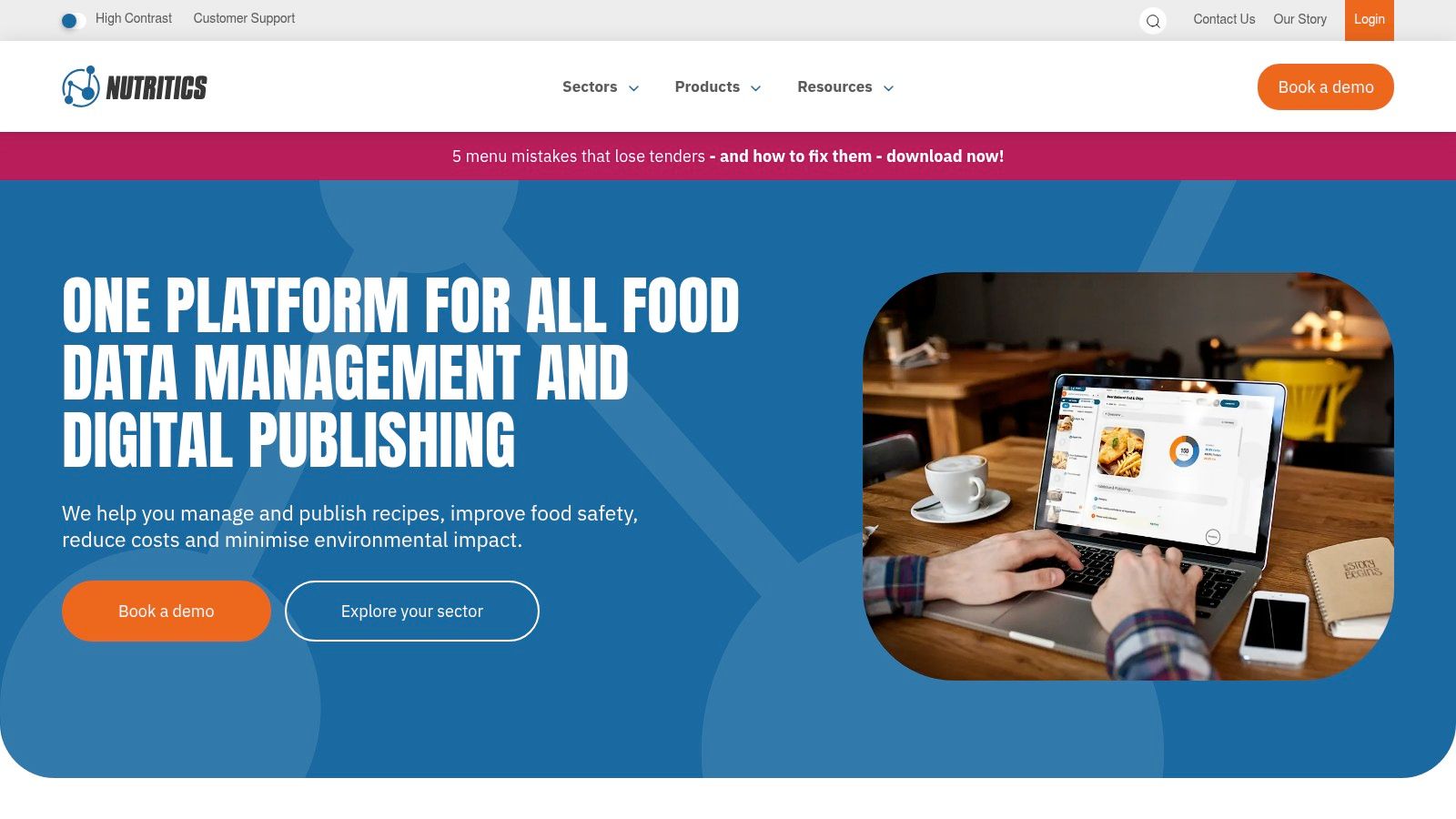
At 6pm on the night before a large event, the test is rarely the menu. It is whether every late guest change, supplier update, and label print still matches what the kitchen is about to serve. Nutritics suits teams that need control at that level, especially across multiple sites where head office has to standardise recipe data, allergen declarations, and PPDS labelling under Natasha's Law.
Its strength is operational discipline. Multi-site caterers, contract operators, and larger hospitality groups usually care less about a polished RSVP journey and more about permissions, supplier mapping, auditability, and print consistency. Nutritics is built for that part of the workflow.
Why Nutritics works for strict control
Nutritics ties allergen compliance to recipe governance and supplier data, which is the right priority for organisations that cannot afford local workarounds. LabelMagic, supplier-to-menu allergen mapping, and site-level print controls help central teams keep output consistent even when menus, ingredients, and staffing vary by venue. For PPDS environments, that matters because the compliance risk often starts upstream with recipe maintenance, not at the printer.
That approach also fits event operations where pre-orders feed production planning. Teams comparing systems for that stage should also review how food pre-order systems for hotels and venues affect allergen capture, kitchen prep, and front-of-house accuracy. If the guest data comes in badly, even well-governed label software will struggle downstream.
The trade-off is clear. Nutritics is stronger in the back-office and production chain than in guest-facing event capture. If your team needs invitees to submit allergies directly, link those disclosures to named attendees, and pass clean instructions to service staff, you will probably need another system in front of it. In practice, that means Nutritics works best as the compliance engine behind the scenes, not as the full end-to-end event workflow on its own.
That distinction matters for event managers. The hard part is often the handoff from guest disclosure to kitchen-ready reports and then to front-of-house service notes. Nutritics handles the controlled food-data side well, but you still need a reliable process for collecting attendee requirements and keeping banquet teams aligned.
In that scenario, a guide on automating allergen collection for events is useful framing for what the handoff should look like.
- Best for: Multi-site caterers and enterprise foodservice teams that need strict label and data compliance.
- Pros: Strong governance, mature PPDS support, detailed supplier and menu data control.
- Cons: Setup can require onboarding support, pricing is usually quote-based, and many event teams will still need a separate guest capture layer.
You can evaluate it at Nutritics.
4. Apicbase
Apicbase makes most sense when event service depends on a complex production kitchen behind the scenes. Stadiums, large-scale caterers, and hospitality groups with multiple prep locations often need recipe control, inventory, planning, and allergen verification before they need polished RSVP tooling.
That's where Apicbase earns its place. It's a back-of-house-heavy system, and that's both its strength and its limitation.
What Apicbase does well
Apicbase focuses on recipe databases, production planning, allergen management, and label printing. For teams feeding event operations from a central kitchen or multi-venue production model, that gives much better visibility into what's being made, what ingredients are flowing into recipes, and where potential compliance gaps sit.
The trade-off is that guest capture isn't the core experience. You can manage the kitchen side well, but you'll still need a reliable front-end process for collecting individual allergies, preferences, and table assignments. That matters because one of the biggest gaps in this category is still the jump from guest dietaries to kitchen-ready event documents. The business context described in this article on allergy-tech gaps in hospitality highlights how fragmented data remains a problem for event planners trying to merge guest disclosures with compliant operational output.
What works in real venues: Back-of-house control is valuable, but it won't save an event if the sales or coordination team captures dietaries in a separate spreadsheet.
For event-led venues, Apicbase often works best as a kitchen engine paired with a dedicated event tool. If your operation already has strong event CRM and RSVP handling, that pairing can be very effective. If not, you risk solving the recipe problem while leaving the guest communication problem untouched. Teams dealing with pre-orders and event compliance should think carefully about allergen compliance for hotel event pre-orders before choosing a BOH-only approach.
- Best for: Large-scale operations, production kitchens, stadium hospitality, and multi-venue food operations.
- Pros: Strong back-of-house visibility, scalable production planning, useful allergen verification workflows.
- Cons: Not a complete event workflow on its own, and pricing is available on request.
Review the platform at Apicbase.
5. CaterCloud
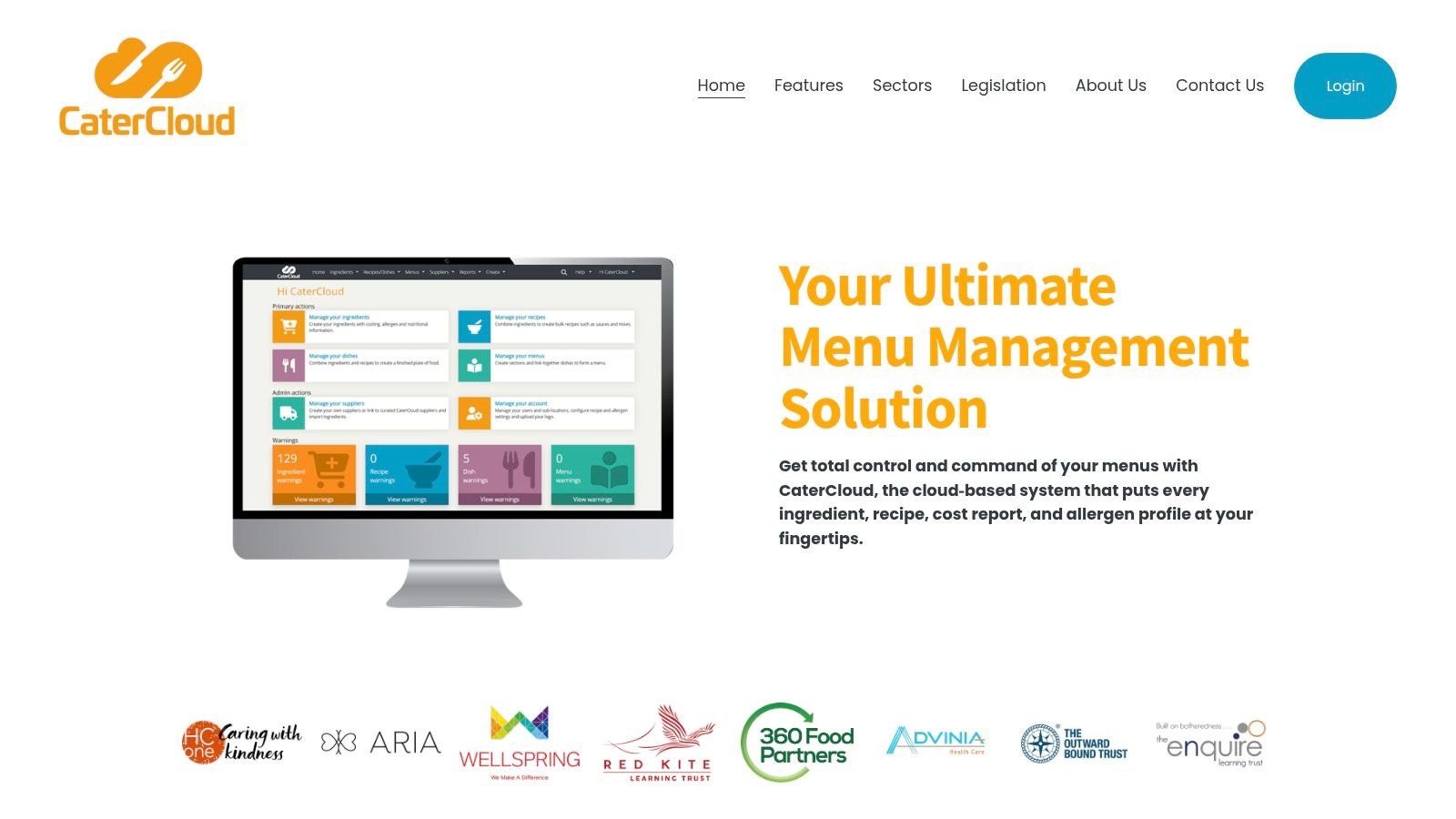
CaterCloud is the practical option for teams that need something simpler and faster to pilot. It's aimed at menu management, allergen profiles, QR-code menus, costing, and PPDS-style labels rather than deep event planning. That narrower focus can be an advantage if your current pain is basic compliance visibility, not enterprise orchestration.
For smaller venues and catering teams, speed matters. A tool that gets live allergen profiles and labels in place quickly can be more useful than a broader platform that takes months to configure.
Where CaterCloud is strongest
CaterCloud's value is straightforward. It gives catering and hospitality teams live allergen profiles, digital menu presentation, menu planning, costing, and built-in PPDS label templates aligned with Natasha's Law use cases. If your operation needs quick allergen matrices and simple digital menu access, it's a sensible candidate.
It also suits venues that are still moving away from manual spreadsheets and static PDFs. But there's an operational boundary. CaterCloud won't solve seating, guest RSVP management, banquet-level place card workflows, or broader event communication in the way a dedicated event platform will. For venues selling private dining, conference catering, or ticketed hospitality packages, that gap becomes obvious quickly.
One practical issue too often ignored is hidden allergen risk beyond the kitchen itself. Multi-vendor events, shared tables, external caterers, and service handoffs can all create compliance blind spots. A UK events industry report discussed in this YouTube briefing on food allergy risk in event logistics notes that the biggest allergy risk often starts in pre-event logistics rather than in the kitchen alone. That's worth remembering if you're evaluating menu tools for complex event delivery.
- Best for: Venues needing a fast, web-based tool for digital menus, allergen profiles, and labels.
- Pros: Quick to pilot, practical UK compliance focus, useful for simple catering environments.
- Cons: Event CRM, formal seating, and RSVP management usually require another system.
If you're weighing that trade-off, it helps to understand where food pre-order systems for hotels and venues fit in the wider workflow.
You can explore CaterCloud.
6. Erudus
Erudus sits earlier in the chain than most of the tools on this list. It's less about guest management and more about giving caterers and venues a supplier-verified data backbone. If your main concern is whether recipe and menu decisions are tied to authoritative product information, Erudus deserves serious attention.
That makes it especially useful for operators who don't fully trust ad hoc ingredient records scattered across sites or spreadsheets.
Why Erudus matters upstream
Erudus provides centralised supplier product data, allergen details, technical specifications, recipe tools, and allergen matrix support. In practical terms, it helps teams build menus from verified supplier information instead of relying on manually maintained allergen notes that drift over time.
That can materially improve confidence in menu design and recipe updates. It's particularly helpful where purchasing changes regularly or substitutes are common. If your chef team and purchasing team don't share the same source of truth, allergen accuracy usually degrades unnoticed until an event exposes it.
There's another reason to be careful with category claims around gluten-free and special diets. In the UK, foods claiming to be gluten-free must meet the legal threshold of 20 parts per million or less, as explained in this overview of UK food allergen rules. That kind of threshold is exactly why supplier-level data discipline matters. It's not enough to label by assumption.
Supplier data won't run your event, but poor supplier data can undermine every event document you produce afterwards.
- Best for: Caterers and venues that want compliance to start with supplier-verified product information.
- Pros: Strong upstream data control, useful recipe and allergen matrix tools, recognised across UK supply chains.
- Cons: It isn't a full event planning system, so you'll still need RSVP, seating, and service-layer tooling.
You can review the platform at Erudus.
7. Spoonfed
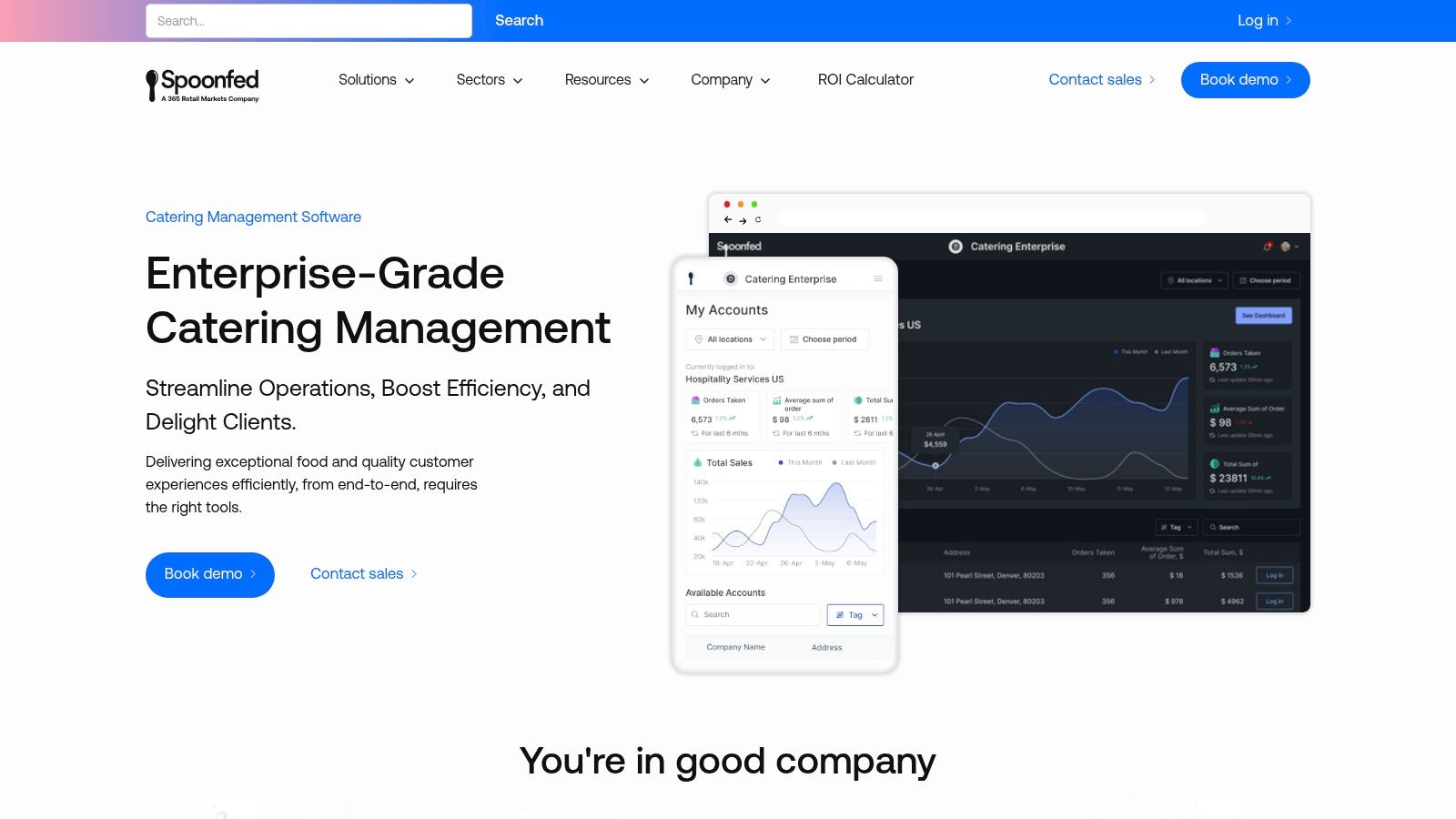
Spoonfed is one of the more natural fits for contract caterers managing meetings and events rather than restaurant service. That distinction matters. Event catering has different pressures. Orders change late, guest lists move, production documents need to stay aligned, and dietaries need to travel with the order rather than live in a separate guest tool no one checks at dispatch.
Spoonfed's strength is that it understands catering operations first.
Where Spoonfed earns its place
Its ingredient and allergen management, production planning, kitchen documentation, group ordering, and enterprise controls make it useful for campuses, workplace catering, and contract catering environments. If your business handles recurring meeting catering, corporate events, or institutional foodservice, Spoonfed is closer to your day-to-day workflow than many restaurant-led systems.
It's also one of the better examples of software that treats allergen handling as part of order production rather than just menu display. That's important for event caterers who don't necessarily need glamorous guest-facing features but do need clear paperwork in the kitchen and dependable handling across large order volumes.
The limitation is familiar. Formal banqueting, table-level service planning, and guest seating aren't the centre of the product. If your events involve plated dinners, gala seating, or front-of-house guest experience management, Spoonfed often needs a companion tool.
- Best for: Contract caterers handling corporate meetings, workplace catering, and repeat event orders.
- Pros: Catering-specific workflow, useful kitchen and production documentation, solid fit for enterprise catering settings.
- Cons: Pricing is quote-based, and formal seating or RSVP management may still require another platform.
You can assess it at Spoonfed.
8. Kobas
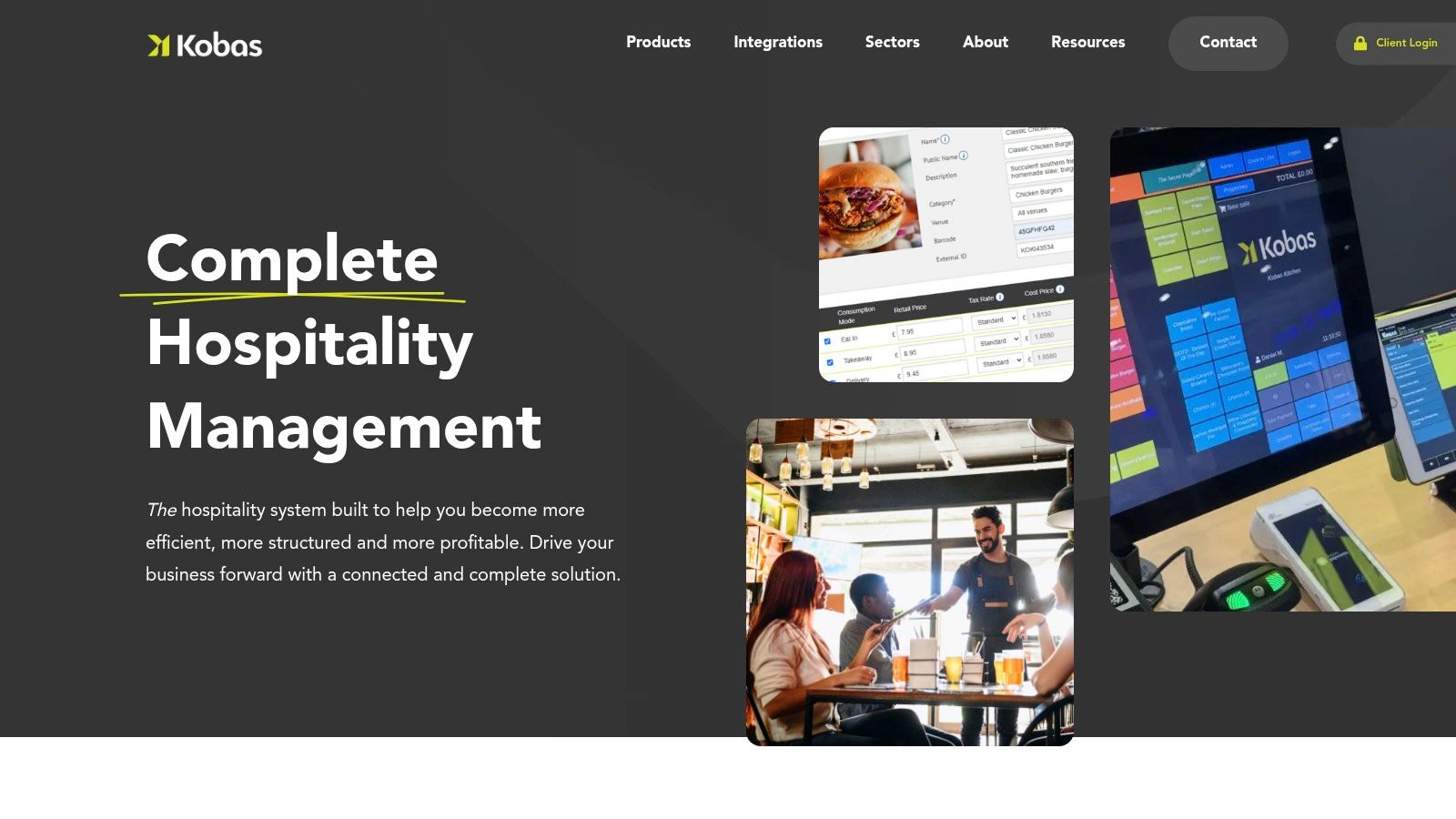
Kobas is most attractive if you already run your venue on Kobas. In that scenario, its allergen and dietary capabilities can be much more valuable than they look at first glance because they sit inside a wider EPoS and back-office environment your team already uses.
For pubs, restaurants, and casual hospitality venues that host private events, that integration can be more practical than layering on a specialist system too early.
Best use case for Kobas
Kobas supports ingredient-level tagging across the 14 UK legislated allergen groups, automatic allergen profiles at recipe and modifier level, and a customer-facing Allergen Identifier with online menu sync. That gives both staff and guests more visibility into dish content without maintaining separate references in multiple places.
This front-and-back transparency is useful for event venues running mixed operations. If your function rooms, bar, restaurant, and event menus all rely on the same stock, recipes, and service teams, then shared allergen visibility reduces duplication. It also helps when events are less formal and more integrated into regular trading.
The downside is that Kobas isn't event-first. Seating plans, RSVP journeys, and banquet administration aren't core strengths. So while it can improve menu and service visibility, larger event teams may still find themselves exporting information into separate planning workflows.
- Best for: Pubs and restaurants already using Kobas for hospitality operations and taking event bookings alongside regular trade.
- Pros: Strong allergen visibility tied to operational systems, customer-facing identifier, useful for multi-site hospitality groups.
- Cons: Event-specific planning isn't central, and some functions depend on modules or add-ons.
See the platform at Kobas.
9. zkipster
zkipster comes from the guest management side, not the catering side. That makes it the outlier on this list, but also one of the most useful tools in the right setting. If you run high-touch galas, banquets, VIP events, or brand-led hospitality where seating precision matters, zkipster is excellent at capturing guest details and keeping those details attached to the seating plan.
That includes dietary requirements and meal choices.
What zkipster does better than catering tools
zkipster handles custom fields, response forms, guest profiling, communications, check-in, and seating charts with much more polish than most kitchen-led systems. For event teams, that often means cleaner data capture at the guest level and fewer last-minute surprises in service.
Where it falls short is compliance execution in the kitchen. zkipster can collect dietaries well, but it isn't a dedicated allergen management, recipe, or label platform. It needs a catering or BOH system downstream if you want kitchen-ready compliance documents, label workflows, or supplier-linked allergen controls.
That said, if your current issue is poor guest data capture rather than poor recipe data, zkipster can solve the right half of the problem very effectively. It's especially strong when event experience, table management, and arrival flow are just as important as meal administration.
- Best for: High-touch galas, banquets, and VIP events where seating and guest profiling are central.
- Pros: Excellent guest data capture, advanced seating logistics, strong communications and check-in tools.
- Cons: Not a kitchen or labelling compliance system, and cost rises with team size and event complexity.
You can explore zkipster.
10. CaterSOFT
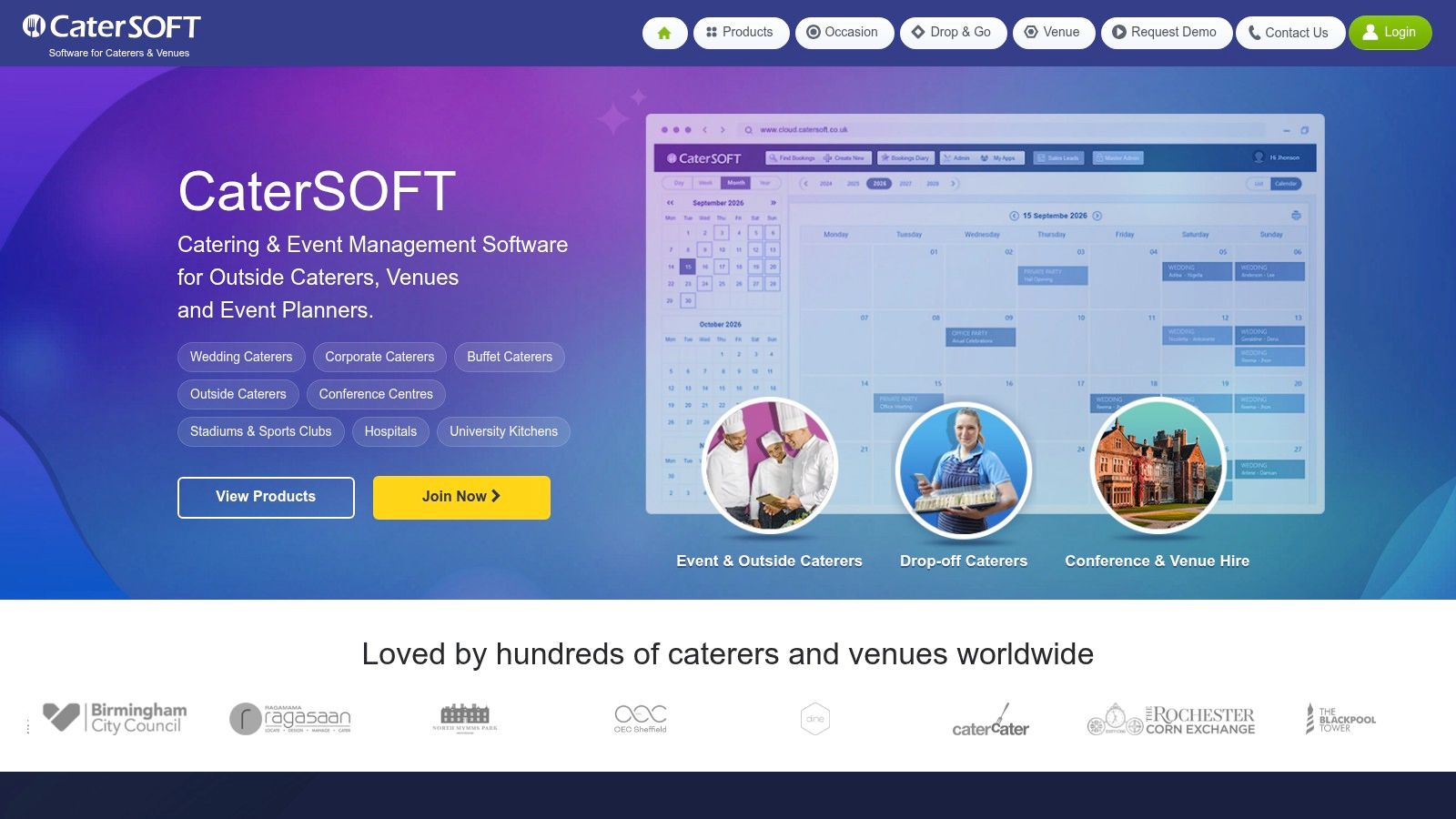
CaterSOFT is a good fit for UK caterers and venue-based teams that want allergen and dietary information to move through the operational workflow without buying a broader enterprise stack. It's especially relevant for delivery-focused catering, corporate events, buffets, and venue catering where orders need to become kitchen sheets, labels, and dispatch documents quickly.
That focus gives it a practical edge for certain types of event business.
Why CaterSOFT suits event caterers
CaterSOFT embeds allergen flags and dietary notes into the flow from menus to orders to kitchen-ready paperwork. That matters because event caterers often fail not at menu creation but at handoff. A dietary note captured at enquiry stage needs to appear again on kitchen sheets, labels, and service documents without relying on someone to remember it.
Its event orientation is stronger than many menu-only tools, but its ecosystem is smaller than some larger platforms on this list. So if you need deep integrations, multi-country rollout, or highly customised enterprise reporting, you may find it more limited. On the other hand, if you need a UK-focused system that understands venue and catering workflows, that narrower footprint can be a benefit.
- Best for: Delivery-focused caterers, corporate event caterers, and venue teams that need allergen visibility from order to dispatch.
- Pros: Event-centric workflow, clear UK catering focus, useful production and service documentation.
- Cons: Smaller ecosystem and demo-led pricing may slow evaluation for some buyers.
You can assess CaterSOFT.
Top 10 Event Allergen & Dietary Tracking Software Comparison
| Product | Core features ✨ | UX & Reliability ★ | Value & Pricing 💰 | Target audience 👥 |
|---|---|---|---|---|
| 🏆 Creventa | ✨ All‑in‑one: enquiries, pre‑orders, drag‑drop seating, ticketing, PCI payments, comms, allergen & BOH docs | ★★★★★; AI‑first workflows; 99.8% transactional email delivery | 💰 Quote-based; ROI claims: up to 70% planning time↓, up to 20% food waste↓ | 👥 Hotels, restaurants, stadia, golf clubs, multi‑site groups |
| Kafoodle | ✨ Central recipe & allergen DB, live menus, guest ordering, PPDS label printing | ★★★★; kitchen‑centric UI; live menu publishing | 💰 Demo/quote; strong recipe control & menu compliance | 👥 Kitchens, menu‑first venues, contract caterers |
| Nutritics | ✨ PPDS/Natasha's Law labels, supplier→menu allergen mapping, menu publishing | ★★★★; enterprise controls; reliable label printing | 💰 Quote-based; one‑system compliance for multi‑site caterers | 👥 Multi‑site caterers, compliance‑heavy operators |
| Apicbase | ✨ Recipes, inventory, production planning, allergen verification & labels | ★★★★; strong BOH visibility; scales for large ops | 💰 Quote-based; optimised for large-scale/production kitchens | 👥 Stadiums, production kitchens, large venues |
| CaterCloud | ✨ Live allergen profiles, QR digital menus, PPDS templates, costing | ★★★; quick web pilot; easy to deploy | 💰 Free trial / quote; fast PPDS & digital menu solution | 👥 Venues needing simple QR menus & labels (education, care) |
| Erudus | ✨ Supplier‑verified product data, Allergen Matrix, recipe builder | ★★★★; authoritative supplier data; strong integrations | 💰 Subscription varies by role; reduces supply‑chain risk | 👥 Caterers anchoring compliance to supplier data |
| Spoonfed | ✨ Ingredient & allergen management, order & production planning | ★★★★; proven in contract & institutional catering | 💰 Quote-based; built for enterprise event catering | 👥 Contract caterers, campuses, corporate caterers |
| Kobas | ✨ EPoS + ingredient/allergen tagging, customer Allergen Identifier, online menus | ★★★★; front + back visibility; POS integrated | 💰 Module pricing; best value with Kobas POS ecosystem | 👥 Pubs, restaurants using Kobas EPoS for events |
| zkipster | ✨ Guest lists, RSVPs, custom dietary forms, seating & check‑in | ★★★★★; premium guest data & seating UX for VIP events | 💰 Tiered pricing; focused on high‑touch events & teams | 👥 Event planners, galas, banquets, VIP events |
| CaterSOFT | ✨ End‑to‑end allergen & diet workflows, kitchen sheets, labels, guest capture | ★★★; event‑centric BOH workflows | 💰 Quote-based; practical for delivery & corporate catering | 👥 Delivery‑focused caterers, corporate event teams |
Future-Proofing Your Event Allergen Management
The best allergen and dietary tracking software for events does more than store a list of ingredients. It creates a controlled chain from guest disclosure to service delivery. That's the difference between having data and having an operationally safe process.
In real venues, most failures happen in the gaps. A guest emails a coordinator instead of using the form. A seating change doesn't make it to the chef. A preference gets mistaken for a medical restriction. A buffet card is correct, but the plated replacement meal isn't. Software can't remove every risk, but the right system does reduce the number of moments where a human has to remember, retype, or reinterpret something under pressure.
The legal backdrop in the UK makes that discipline mandatory. Businesses need allergen information to be clear, accurate, available in writing, and properly managed by trained staff. PPDS foods require full ingredient labelling with the 14 mandatory allergens emphasised. For event operators, that means the workflow has to hold up under scrutiny, not just under normal service conditions.
The strongest platforms in this list solve different parts of that puzzle. Creventa is the most complete choice for venues that need guest capture, seating, pre-orders, and kitchen reporting in one place. Kafoodle and Nutritics are strong where recipe, menu, label, and governance control lead the buying decision. Apicbase and Erudus are powerful on the back-of-house and supplier-data side. Spoonfed and CaterSOFT fit event caterers well. Kobas works best for operators already inside its wider hospitality stack. zkipster is the specialist tool when guest logistics and seating are the bottleneck.
Software choice should follow your point of failure, not your wish list.
If your biggest risk sits in guest data capture, prioritise tools that collect dietaries directly from attendees and keep them attached to seating and service documents. If your biggest risk sits in recipes, labels, and supplier substitutions, prioritise systems with stronger kitchen and data governance. If both are weak, you probably need an integrated event and catering workflow rather than another standalone point solution.
One final practical point. Don't collapse allergies, intolerances, religious requirements, and personal preferences into one catch-all field. Teams need to know what can inconvenience a guest and what can hospitalise a guest. The better systems in this category reflect that difference clearly.
Investing in dedicated software is really about moving from reactive administration to controlled execution. That shift improves guest safety, supports legal compliance, reduces operational friction, and gives both the kitchen and front-of-house teams a version of the truth they can trust.
Creventa is worth a close look if you want allergen and dietary management inside a full hospitality event workflow rather than bolted on afterwards. Its combination of guest pre-orders, seating layouts, allergen capture, place cards, chef reports, payments, ticketing, and venue reporting makes it one of the most practical options for operators who are done with spreadsheets. Explore Creventa to see how it fits your venue.