UK hospitality guests now spend an average of 145 minutes in venues and £26.83 per visit, while drink volumes remain broadly stable at -0.1% year to date according to UK hospitality venue data. That combination changes how event operators should think about upselling. The opportunity isn't to push guests towards more alcohol at the bar. It's to offer a well-timed, clearly priced package that makes the occasion easier, more enjoyable and more predictable for the organiser.
The strongest drinks upsell happens before the first glass is poured. It starts in the enquiry, becomes visible in the proposal, feels simple at checkout and arrives as an operationally clear instruction for the bar team. The mechanics below focus on the parts that are easiest to get wrong, including consumption maths, price steps, moderation-friendly options, pre-payment and seasonal execution.
Table of Contents
- Why Events Are the Ideal Environment for Drinks Upsells
- Building Base Packages Using Consumption Maths
- Designing a Low-Friction Pricing Ladder
- Capturing Revenue from the Moderation Shift
- Pre-Order Flows and Payment Workflows That Convert
- Seasonal Timing and On-Site Execution Tactics
Why Events Are the Ideal Environment for Drinks Upsells
Event guests spend around two and a half hours at the venue and £26.83 per visit, while overall drink volumes remain broadly stable. The commercial opportunity is therefore not to push guests towards higher consumption. It is to make each occasion easier to buy, easier to host and better matched to the event schedule, as shown in the UK hospitality dataset.
Events create the conditions for that offer. Arrival drinks, meal pairings, interval top-ups and a final-hour upgrade fit moments guests already understand. The organiser is working to a defined budget, and attendees are more receptive to hosted or pre-selected choices than they are during an ordinary walk-in visit.
| Metric | Event Guests | Walk-In Patrons |
|---|---|---|
| Typical purchase context | Planned occasion | Individual visit |
| Payment behaviour | Often pre-committed or hosted | Usually drink by drink |
| Decision environment | Social, time-bound and shared | More individual and flexible |
| Upsell opportunity | Packages, upgrades and pairings | Immediate product recommendation |
A package also removes hesitation at the point of service. Guests do not have to weigh every drink against its price, while the organiser can describe the offer as part of the event rather than as a series of separate purchases. That matters when demand arrives in a short window. During the fourth weekend of the Guinness Six Nations, UK pubs served 18.7 million pints of draught beer and cider, with an average pub pouring 571 pints over the match weekend. A clear bundle can reduce queues, choice overload and payment friction when attendance is concentrated.
Sell the occasion, not the bottle
Festival spending shows how strongly format shapes beverage demand. UK summer music festivals were estimated to generate more than £100 million in alcohol spend, with around 7.4 million attendees across the previous three years and average drinks spend of £32.27 per person. The analysis projected total festival drinks spend could reach £200 million, as outlined by The Drinks Business. The practical lesson is to sell a defined experience, such as a welcome serve, table wine, beer allocation or a moderated no/low option, rather than just presenting a more expensive bottle.
For tastings, weddings and live-event hospitality, Craft beer event planning can help shape the service format around the occasion. The drinks list should support the running order, staffing plan and guest profile, not sit apart from them.
The commercial journey begins with the enquiry and continues through settlement. Put the welcome-drink package in the quote, show the price difference for an upgrade, confirm the choice when guest numbers are final and give the bar team a clear service instruction. Early choices also support pre-orders increase event revenue, because organisers and guests have time to select a package without queue pressure.
Building Base Packages Using Consumption Maths
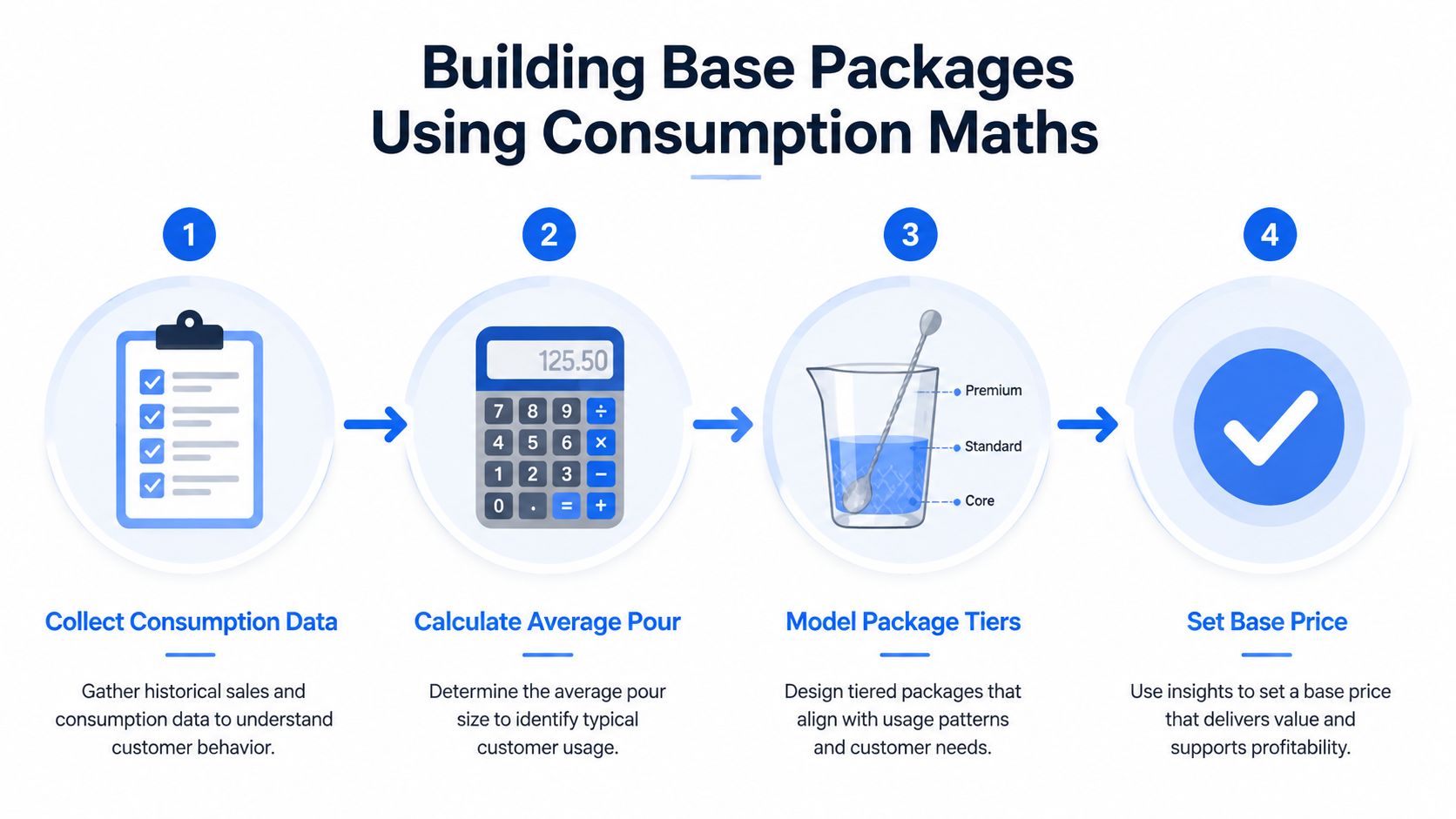
Most weak drinks packages start with a price that feels reasonable, then work backwards to see whether the stock and labour costs fit. That approach creates two risks. The venue can under-order and disappoint guests, or over-promise an unlimited service that erodes margin.
Start with the consumption floor instead. A UK drinks calculator uses a base rule of roughly five drinks per guest for a four-hour reception. Its worked example for 100 guests estimates around 600 drinks, converting that requirement into approximately 30 bottles of wine, 90 beer serves and 50 water bottles, with quantities rounded up to protect service quality. The methodology is set out in this UK event drinks calculator.
Build the floor before adding the upgrade
Use this sequence for each event:
- Define the service window. Separate arrival drinks, meal service, intervals and the final hour. Consumption isn't evenly distributed.
- Estimate by category. Model wine, beer, sparkling, water and no/low drinks separately. A guest choosing a spritz isn't consuming the same stock as someone drinking bottled beer.
- Round to service units. Convert pours into bottles, cans, kegs or batches, then round up. A partial bottle doesn't protect the bar from a stockout.
- Price the operational promise. Include product, staffing, glassware, ice, storage, collection and wastage before presenting the package.
The venue calculator's example is useful because it demonstrates stock discipline, but it isn't a universal consumption forecast. A conference with substantial food service may move more slowly than a late-night private party. The package should therefore be based on your own event history, guest profile and menu format.
Choose the right service model
An allocated package gives the organiser a defined quantity or selection. It protects margin and makes stock planning easier, but the venue must explain what happens when the allocation runs out. A hosted bar offers broader choice and a smoother guest experience, yet it requires tighter controls around pour sizes, premium substitutions and closing time.
One UK venue lists a two-hour unlimited package at £28.50 per person, rising to £49.95 per person for six hours, with premium additions such as Pimm's, Prosecco or spirits priced at £15.95 to £19.95 per person extra, according to its drinks calculator reference. The practical lesson is to anchor price to duration, then add categories as modular enhancements.
For food-led events, wine selection and purchasing can also affect the package's perceived value. A resource on event wine from McLaren Vale is useful when building a bulk-wine brief, particularly where the wine needs to support a themed menu or regional experience. Keep the cost model grounded in actual pours, not the prestige of the label alone. For a broader view of event costing, food cost calculation can help teams bring menu and beverage decisions into the same commercial conversation.
Designing a Low-Friction Pricing Ladder
A pricing ladder works when each upgrade feels like a small, defensible decision. If the organiser must rebuild the budget at every tier, the upgrade becomes a new purchase and conversion drops. Build around a dependable base, a clearly more appealing middle option and a premium tier that sets the ceiling without making the middle look poor.
A UK venue package matrix lists house wine or orange juice at £5.75 to £8.25 per person, Prosecco at £7.75 to £10.50 per person and Champagne at £11.50 to £16.75 per person, depending on pour size, as shown in the Exeter drinks reception packages. It also includes upgrades such as canapés. That pairing matters because a drink gains perceived value when it belongs to a defined service moment, rather than appearing as a standalone bottle choice.
Make the first step feel small
Start with a welcome drink, then offer sparkling wine or a named spritz, followed by Champagne or a hosted premium bar. The commercial lever is the price delta between adjacent choices. The same venue matrix shows a move from orange juice to sparkling elderflower or fruit spritz for only £0.75 per person, a low-friction step that fits naturally inside a booking form.
Keep the first recommended uplift to under about 15% of the base package, based on the package matrix. This is a presentation benchmark, not a rule for every tier. A larger jump can work when it adds a clear service benefit, but the immediate upgrade should not feel like a complete repricing.
Use a direct comparison:
- Standard: A reliable welcome drink or house selection.
- Enhanced: A more distinctive serve, improved presentation or an additional event moment.
- Premium: A recognisable prestige product, cocktail service or broader hosted choice.
The middle tier should carry the strongest operational logic. It can include a better serve or an extra touchpoint without adding the stock risk and staffing burden of a fully hosted premium option. Price the added value against consumption, pour size and service time, not just the product label.
Put the ladder where the decision happens
Show all three options in the initial proposal, repeat them in the confirmation email and offer one-click upgrades while the organiser confirms the guest list. Tie the selected tier to the service brief, so the bar team can see the agreed products, quantities and timings without searching through an email thread. Guidance on pre-order management for restaurants applies here because deadlines, guest choices and operational reports matter just as much for event drinks.
Avoid a misleading decoy. A premium tier can establish an anchor, but it must remain deliverable and clearly described. If the top option looks vague or implausible, trust falls across the whole ladder. The middle tier should win because it balances occasion, choice and certainty, not because the other packages were designed to fail.
Capturing Revenue from the Moderation Shift
Upselling doesn't mean selling more alcohol. That assumption excludes guests who are moderating, driving, observing a religious practice, taking medication or choosing not to drink. It also makes the package feel dated when the wider UK market is moving towards more deliberate consumption.
UK evidence points to a clear opening for better package design. UCL forecasts that no/low drinks could reach about 1.0% of on-trade alcohol sales volume by the end of 2025, while event coverage from BMA House reported soft drinks rising from 12.5% of drinks sold in 2024 to 31.4% in 2025, as summarised by Lumina Intelligence. The figures are specific to the cited contexts, but the practical message is broader. A drinks package needs to accommodate different definitions of celebration.
Build parity into the menu
A no/low option shouldn't read like a consolation prize. Give it the same visual prominence and service care as the alcoholic package. Premium botanical serves, crafted mocktails, sparkling alternatives, quality tonics and thoughtful food pairings can all create an occasion without relying on alcohol.
Use parallel names and benefits:
- A welcome serve for every arrival.
- A paired drink during the meal or presentation.
- A refill or interval moment.
- A distinctive final serve that feels intentional.
The price should reflect ingredients, preparation and service, not an assumption that alcohol is the only source of value. If the alcoholic package includes glassware, garnish and table service, the no/low package should receive equivalent treatment.
Handle mixed groups without awkwardness
Mixed-package events need a clean process. Let the organiser select a standard alcoholic package for some guests and a premium no/low package for others, then capture the choice by guest rather than forcing one decision across the whole table. The proposal should show the two options side by side, with clear counts and a single payment route.
Don't ask non-drinkers to justify their selection. Phrase the offer around preference, such as “Choose your arrival and meal drinks”, rather than “Select the alcohol-free alternative”. The drink pre-order guide for events covers the type of advance-choice workflow that makes this practical, especially when the venue needs a final service report.
Moderation-friendly upselling protects experience as well as revenue. It gives the organiser a more inclusive package, gives the venue more premium products to sell and reduces the pressure on staff to improvise alternatives on the night.
Pre-Order Flows and Payment Workflows That Convert
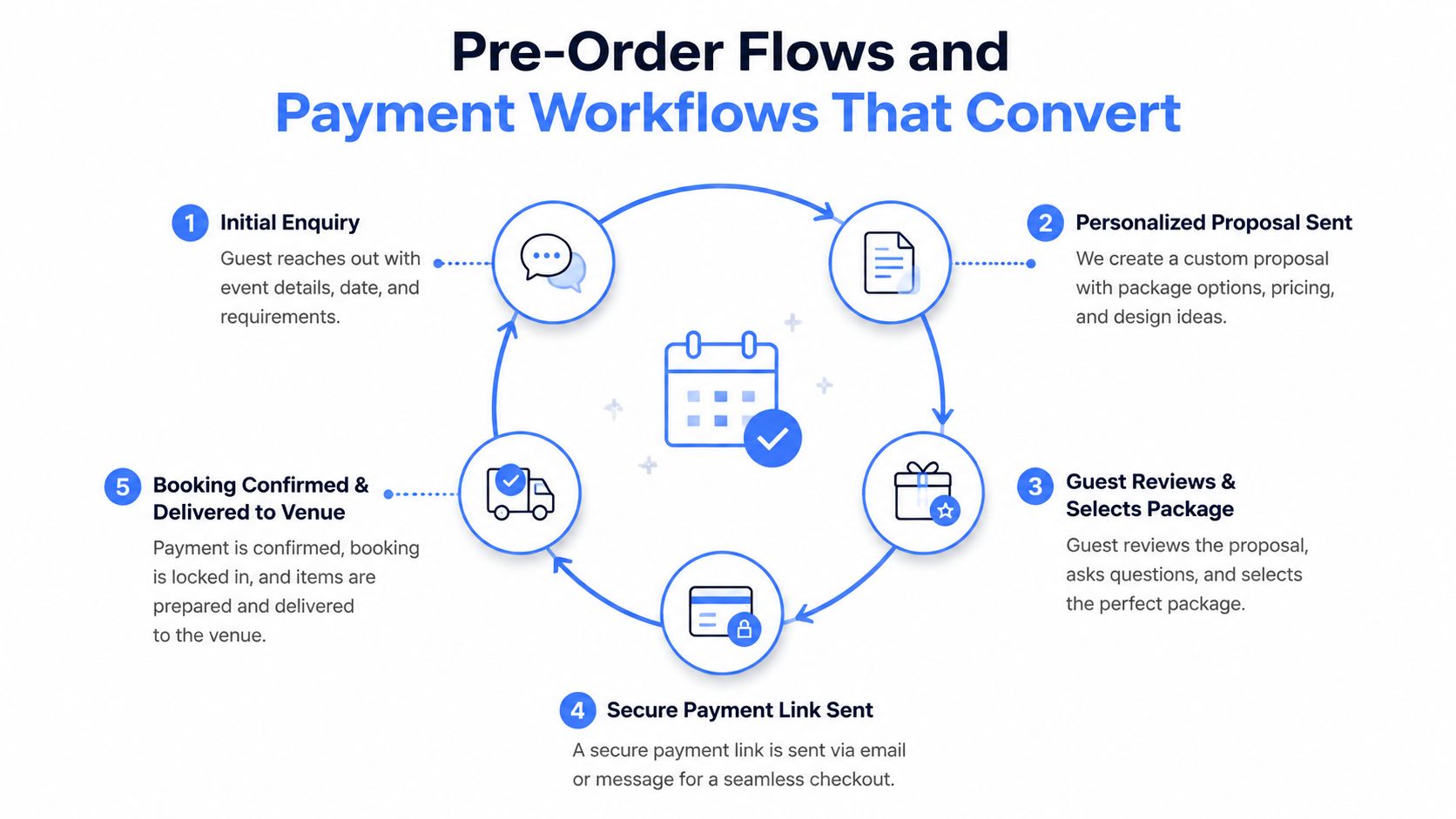
A drinks package becomes dependable revenue when the guest has chosen it, payment is secured and the venue holds an accurate service record before the event. Start the process during the enquiry-to-confirmation window. Waiting until final details are filed leaves less time to resolve guest counts, preferences and payment questions.
Show the base package in the proposal, then place the upgrade in the confirmation flow after acceptance. Follow with limited, useful reminders for undecided guests. One venue group makes drinks packages available by pre-order only, requires full payment before the event and sets a menu pre-order deadline of 10 days in advance, according to its drinks package terms.
Use a clear sequence
A practical workflow looks like this:
- Initial enquiry: Ask about event type, timing, guest profile and service expectations.
- Proposal: Show the base package, one recommended upgrade and a no/low option.
- Selection: Let the organiser confirm quantities, categories and guest-level preferences.
- Payment: Send a secure payment link with the deadline, adjustment rules and refund terms.
- Delivery: Send the confirmed package, quantities and service notes to the event and bar teams.
Offer the first prompt at T-minus 21 days, send a reminder at T-minus 7 and make a final SMS prompt at T-minus 48 hours. These are operating prompts, not universal performance benchmarks. Match them to the booking cycle, keep the message count limited and give each message a clear action.
Your drinks are ready to choose. We've included the standard arrival package, plus a premium upgrade with a more distinctive serve. Select your preferred option before the event deadline so we can prepare the right quantities and keep service moving smoothly.
Connect payment to the service record
Payment and operating data should travel together. The bar team needs the package tier, guest count, start and finish time, included categories, no/low requirements and exclusions. Reconcile one shared record rather than relying on separate spreadsheets, email threads and till notes.
Some venues let the organiser pre-agree a budget, opening times and drink types, with charges based on actual consumption if the budget is not met. Others customise packages by table, arrival window or networking session, while bar staff are added separately at a fixed rate. These choices affect staffing, stock control and the organiser's confidence, so display them before payment. Details on available event drinks options illustrate how package scope and staffing can be separated.
Set adjustment rules on the payment page. State when guest counts may change, how unused allocations are treated and what happens after cancellation. Clear terms protect revenue because organisers can decide without waiting for a manual exception.
Use this short video as a practical visual reference for the workflow:
For venues collecting food and drinks choices together, event food and drink pre-orders can run through one guest-facing process instead of separate forms. That gives the kitchen, bar and event manager one final record to check before service.
Seasonal Timing and On-Site Execution Tactics
Timing changes what guests perceive as valuable. A cold, sparkling serve is easier to sell at an outdoor summer reception, while a warm, spiced option fits a winter gathering. The package should respond to the event's atmosphere, weather exposure and service format, not just repeat the same premium list throughout the year.
CGA by NIQ reporting from 2025 shows how quickly conditions can alter demand. In early May, beer and cider sales rose 15% and 43% week on week, while soft drinks rose 8% to 9% over two weeks during hot weather, according to trade drinks sales reporting. For event operators, that supports a flexible approach. Highlight chilled long drinks and soft-drink upgrades for warm outdoor functions, then adjust stock and messaging when the forecast changes.
A useful seasonal plan might include:
- Summer receptions: Spritzes, rosé, chilled low-alcohol serves and premium soft drinks.
- Winter occasions: Mulled wine, hot toddy-style serves and warm alcohol-free options.
- Corporate festive events: A polished arrival package, table wine and a premium upgrade that feels celebratory.
- Sporting hospitality: Fast-to-serve beer, cider, water and no/low choices presented before peak demand.
Seasonal beverage thinking also applies outside formal events. Guidance on how to boost café revenue with seasonal drinks offers useful ideas for translating weather and calendar changes into more relevant menu prompts.
Make the on-site prompt conversational
The bar team shouldn't pressure guests. Give staff a short script for each service moment:
- Arrival: “Would you like the standard welcome serve, or the premium sparkling option included in the upgraded package?”
- Mid-event lull: “We're refreshing the drinks station now. The signature spritz and alcohol-free version are available if you'd like to try either.”
- Last hour: “The hosted package is moving into its final service window. Would you like one more table pour or a soft drink before we close the bar?”
Use table cards or QR codes for instant upgrades only when the operational team can fulfil them. A prompt that creates a queue or sends guests to an unprepared station damages trust. Reusable cups also need planning. Manchester City Council identifies single-use plastic bar cups as a significant source of event litter and recommends convenient return points, clear signage, exit checks and incentives. Its guidance describes professional washing with a pre-wash at 80°C and a rinse at 60°C, as set out in reusable-cup guidance for events.
Track the commercial result after every event. A simple dashboard should separate pre-sold revenue from on-site additions and record the package selected, event type, weather context, guest count and service issues.
| KPI | Definition | Target Benchmark | Tracking Frequency |
|---|---|---|---|
| Package attach rate | Share of bookings adding a drinks package | Set from your own baseline | Per event |
| Per-head wet spend | Drinks revenue divided by attending guests | Compare with package target | Per event |
| Pre-order conversion | Confirmed packages from invitations sent | Compare by message and timing | After each campaign |
| On-site incremental revenue | Extra drinks revenue generated during service | Track by event format | Per event |
| Service variance | Difference between planned and actual stock or consumption | Keep within agreed operating tolerance | During settlement |
Sustainability can support the package story when it is operationally credible. A UK council case-study collection found that six events held between October 2018 and December 2019 saved 1.7 million single-use plastic cups, reduced cup waste by an estimated 96%, around 30 tonnes, and cut estimated CO2e emissions by 82%, around 90 tonnes. The collection also describes a £1 deposit model for a first drink, which can be incorporated into a reusable-cup service plan without making the return process confusing, as documented by UK reusable-cup event case studies.
Creventa brings enquiries, proposals, guest drink pre-orders, payments, seating, dietary information, service reports and post-event feedback into one hospitality workflow, with public and transparent pricing. Visit Creventa to see how your team can turn drinks-package decisions into confirmed revenue and clearer instructions for every event.
Andrew Norton, Founder, Creventa. Andrew founded Creventa after years working with hospitality venues on the admin gap between a confirmed booking and event day.