If you're collecting event pre-orders with email chains, spreadsheet tabs, and last-minute phone calls, you already know where it goes wrong. One guest replies to the wrong thread. Another sends dietary details in a separate message. Someone changes their starter after you've printed the kitchen sheet. Then front of house asks which table ordered the sparkling wine package, and nobody wants to trust the spreadsheet because it was edited three times that morning.
That process feels normal in a lot of venues, but it's expensive in time, accuracy, and guest experience. Implementing an automated pre-order collection system can reduce event planning effort by up to 70% according to CloudKitchens on pre-order takeout benefits. That's the difference between a team that spends its week chasing forms and a team that spends its time running the event properly.
A significant prize isn't just less admin. It's cleaner allergen handling, better briefing for the kitchen, stronger wet sales, and fewer unpleasant surprises on the day. Venues also use pre-order accuracy to tighten forecasting and reduce food waste at events, which matters when margins are under pressure.
Table of Contents
- The Hidden Cost of Disorganised Event Pre-Orders
- The Traditional Workflow for Collecting Pre-Orders Manually
- Why Manual Pre-Order Collection Breaks Down
- The Automated Solution A Modern Pre-Order System
- Unlocking More Revenue with Smart Pre-Order Strategies
- Frequently Asked Questions about Event Pre-Orders
The Hidden Cost of Disorganised Event Pre-Orders
A familiar scene plays out every week in hospitality. A wedding for eighty is booked. A corporate dinner is confirmed for the same weekend. The events team sends menu options, waits for replies, copies choices into a spreadsheet, then spends the next few days checking whether “no dairy” means intolerance, preference, or a full allergen issue.
The problem isn't just that manual collection is slow. It's that every handoff creates another chance for bad data. Guest selections move from inbox to spreadsheet, from spreadsheet to table plan, from table plan to kitchen notes, and from kitchen notes to service briefing. By the time the event arrives, nobody is fully sure which version is correct.
Operational reality: manual pre-orders rarely fail in one dramatic moment. They fail through dozens of tiny avoidable mistakes.
That's why process matters so much. A structured system doesn't just tidy up admin. It gives the kitchen cleaner prep information, gives front of house confidence at service, and gives guests a smoother experience before they even arrive.
For managers working out how to collect food and drink pre-orders for events, the biggest shift is to stop treating pre-orders as a side task. They're part of event operations. Handle them loosely and the whole event feels loose.
The Traditional Workflow for Collecting Pre-Orders Manually
If you had to run the whole process without dedicated software, this is the manual method that works best. It's not elegant, but it's serviceable if the team stays disciplined.
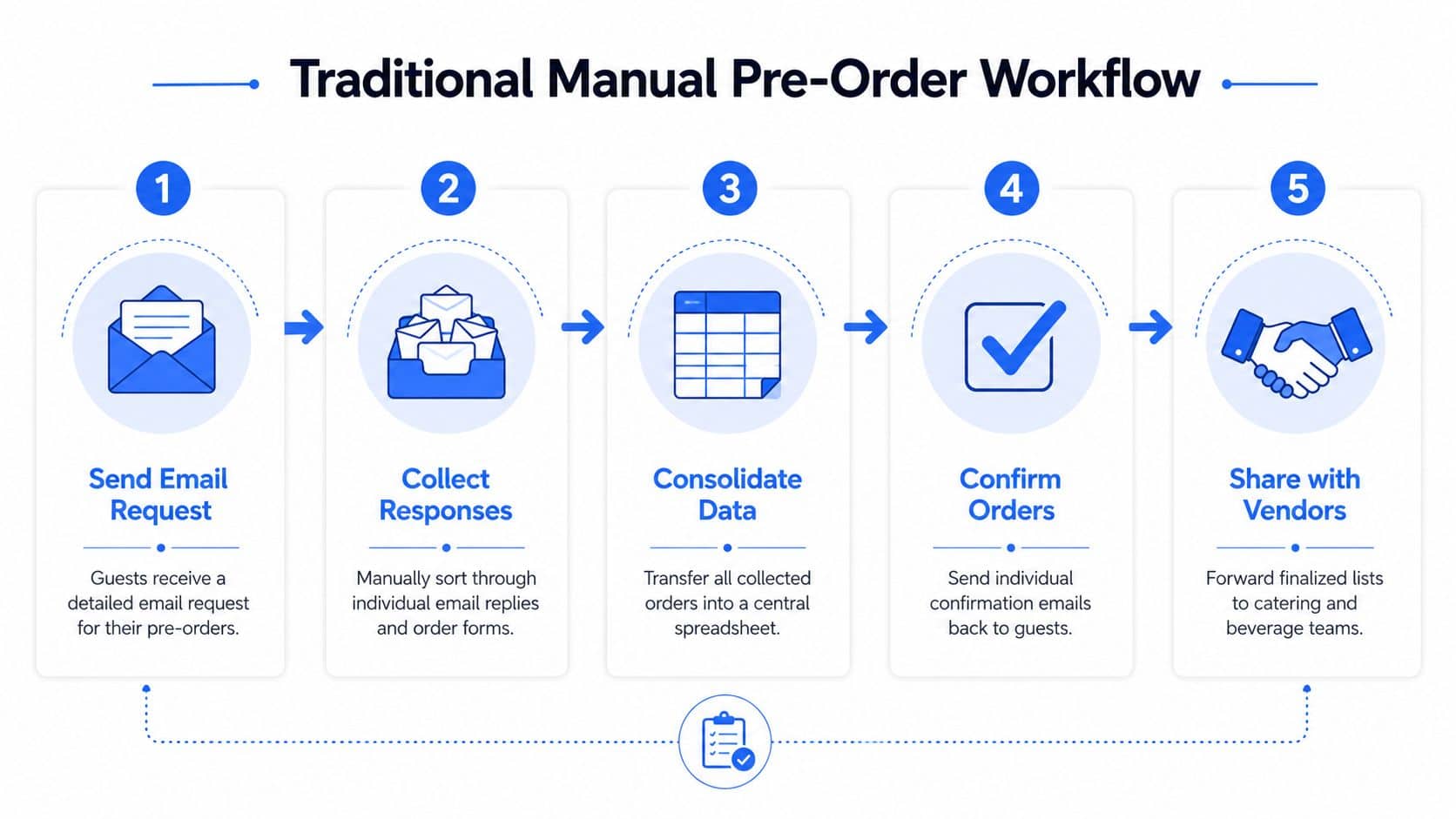
Start with a menu that can actually be delivered
The first mistake many venues make is offering too much choice. A pre-order menu should be built for decision-making and execution, not for showing everything the chef can cook.
Keep the structure simple:
- Limit core choices: Offer a manageable number of starters, mains, desserts, and drinks so guests can decide quickly and the kitchen can prep reliably.
- Label allergens clearly: Put dietary and allergen information directly against each item so guests don't need to guess or send separate clarification emails.
- Define upgrade items: If there's a supplement for a premium dish or drinks package, state it plainly from the start.
A bloated menu slows responses and creates confusion. A focused menu gets cleaner submissions.
Set deadlines before you send anything
Deadlines need to be operational, not aspirational. Work backwards from purchasing, mise en place, staffing, and final room setup.
Set three internal dates:
- Guest submission deadline
- Final review deadline for your team
- Kitchen cut-off for prep and ordering
If you don't lock these in early, the deadline drifts every time a late guest asks for an exception.
Leave too much flexibility in the process and you'll pay for it on event day.
Send clear invitations and chase responses
Manual pre-order collection lives or dies on the quality of the first message. Your invitation needs to include the event date, booking name, menu, response deadline, how to submit, and who to contact for questions.
Then the chasing starts. That's where most of the labour sits.
- First send: Branded email with menu choices and instructions.
- Follow-up chase: Reminder to non-responders only.
- Final chase: Last call before the deadline, usually by email and phone for key contacts.
Teams often underestimate how much time this takes, especially for larger social events where one organiser is collecting choices from multiple guests. If you're still relying on email and sheets, a process to replace pre-order spreadsheets usually starts with fixing this communication loop first.
Consolidate by guest, then by table
Once replies start coming in, somebody has to clean the data. That means entering every guest's selections into a master sheet, checking names are spelled consistently, linking each order to the correct party, and matching it against the seating plan.
A short table helps here:
| Checkpoint | What to verify |
|---|---|
| Guest identity | Correct full name and booking group |
| Menu choices | Correct courses and any upgrades |
| Dietary notes | Clear allergen and preference detail |
| Seating link | Right table or seat allocation |
| Drinks | Pre-ordered packages, bottles, or arrival drinks |
Don't brief the kitchen from raw email replies. Always consolidate into one controlled version.
Brief the kitchen and front of house separately
The kitchen needs one view of the event. Front of house needs another. If you give both teams the same cluttered sheet, both teams will work around it differently.
Produce:
- A chef sheet: grouped by course counts, dietary notes, and table sequencing.
- A service sheet: grouped by table, guest name, drinks, special requests, and exceptions.
This manual workflow can work. It just depends on consistency, patience, and somebody owning every stage.
Why Manual Pre-Order Collection Breaks Down
The issue with manual systems isn't that they never work. It's that they only work when nothing slips. In live venue operations, something always slips.
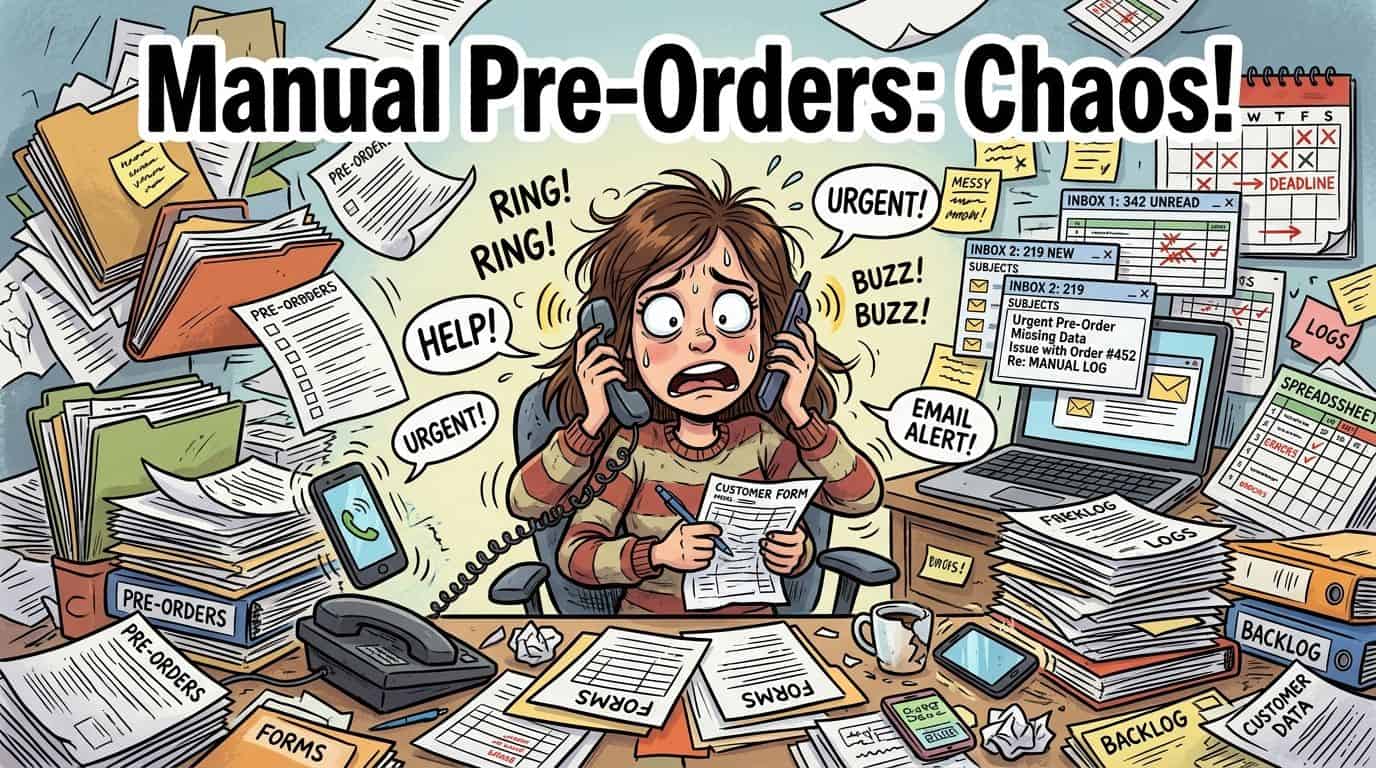
Admin spreads across too many people
One coordinator sends the menu. A duty manager chases the client. A restaurant supervisor updates the sheet. Then the kitchen asks for a revised count. Nobody has a single source of truth.
That's where admin multiplies. Teams spend time checking, rechecking, and apologising for avoidable confusion. The work doesn't feel strategic because it isn't. It's patching.
Errors creep in when data moves by hand
Every manual transfer creates risk. A guest says “nut allergy” in an email. Someone shortens that to “NF” in the spreadsheet. Then a chef reading a printed list has to interpret it under pressure.
This matters operationally and financially. Venues implementing accurate pre-ordering have reported up to 20% lower food waste, according to the ONS hospitality impact analysis. Better information means tighter purchasing and fewer unwanted dishes.
The spreadsheet isn't the system. It's just the place where problems get stored.
There's also the guest-facing cost. If a guest submits a choice and never receives a clear confirmation, they'll often arrive unsure whether the venue has recorded it properly. That uncertainty weakens trust before service even starts.
Revenue gets left on the table
Manual collection tends to focus on getting the basics in. Starter, main, dessert. Done. That leaves little room for structured upsells such as welcome drinks, bottles for the table, paid course upgrades, or celebration add-ons.
Staff often avoid offering extras because every extra line adds more admin. That's rational, but it's still lost revenue. The venue ends up designing the process around what's easiest to manage manually, not around what guests are willing to buy.
If you want fewer mistakes and less duplicated effort, the answer usually isn't “train staff harder”. It's to streamline hospitality operations and minimise errors by removing the manual handoffs that cause the mistakes in the first place.
The Automated Solution A Modern Pre-Order System
A modern pre-order workflow should mirror the manual process, but remove the repetitive work. The venue still decides the menu, deadlines, rules, and service plan. The difference is that the system handles collection, reminders, consolidation, and reporting.
What the guest sees
The guest experience should be simple. They receive a venue-branded invitation, open a mobile-friendly form, choose food, add dietary details, select drinks, and submit. No attachments. No back-and-forth. No separate message for allergies.
A strong setup also uses reminder timing properly. The practical rhythm is:
- At invite
- 7 days before
- 2 days before
That cadence keeps responses moving without the team chasing people one by one.
For venues exploring different digital collection journeys, the Clepher menu chatbot guide is a useful reference point for how menu-led interactions can be made easier for guests without adding friction.
What the venue team gets back
On the venue side, the gain is control. Orders don't sit in scattered inboxes. They land in one place, attached to the event, the guest, and the table plan.
One hospitality-specific option is Creventa, which can trigger pre-order workflows once a booking passes the venue's chosen threshold, collect food choices, allergies, and drink pre-orders, and produce kitchen-ready reports with zero manual data entry, as described on Creventa's restaurant pre-order software page.
That structure matters because event pre-orders aren't the same as ordinary advance ordering. You need grouped responses, per-guest dietary records, and a clean way to turn guest choices into service documents.
A system built for this should also allow:
- Venue branding: the guest journey should look like your venue, not a generic form.
- Menu rules: maximum selections per guest, optional upgrades, and edit controls.
- Automatic reporting: chef reports and drinks orders by table without rekeying.
- Payment support: deposits or pre-payments handled cleanly through approved gateways.
Here's the video overview:
Where automation helps most
The biggest improvement isn't glamorous. It's that nobody has to keep rebuilding the same event sheet by hand.
Automated systems also support the wider event lifecycle. That includes branded communications, cleaner handover into service, and the reporting that tells you what guests chose. For teams wanting to automate event pre-orders, that's usually where the labour saving becomes obvious.
Good automation doesn't replace operational judgement. It removes the repetitive admin that gets in the way of it.
Used properly, software turns pre-orders from an admin burden into a reliable operational process.
Unlocking More Revenue with Smart Pre-Order Strategies
Once the collection process is organised, pre-orders stop being just a control tool and start becoming a sales tool. That's where a lot of venues miss the opportunity.
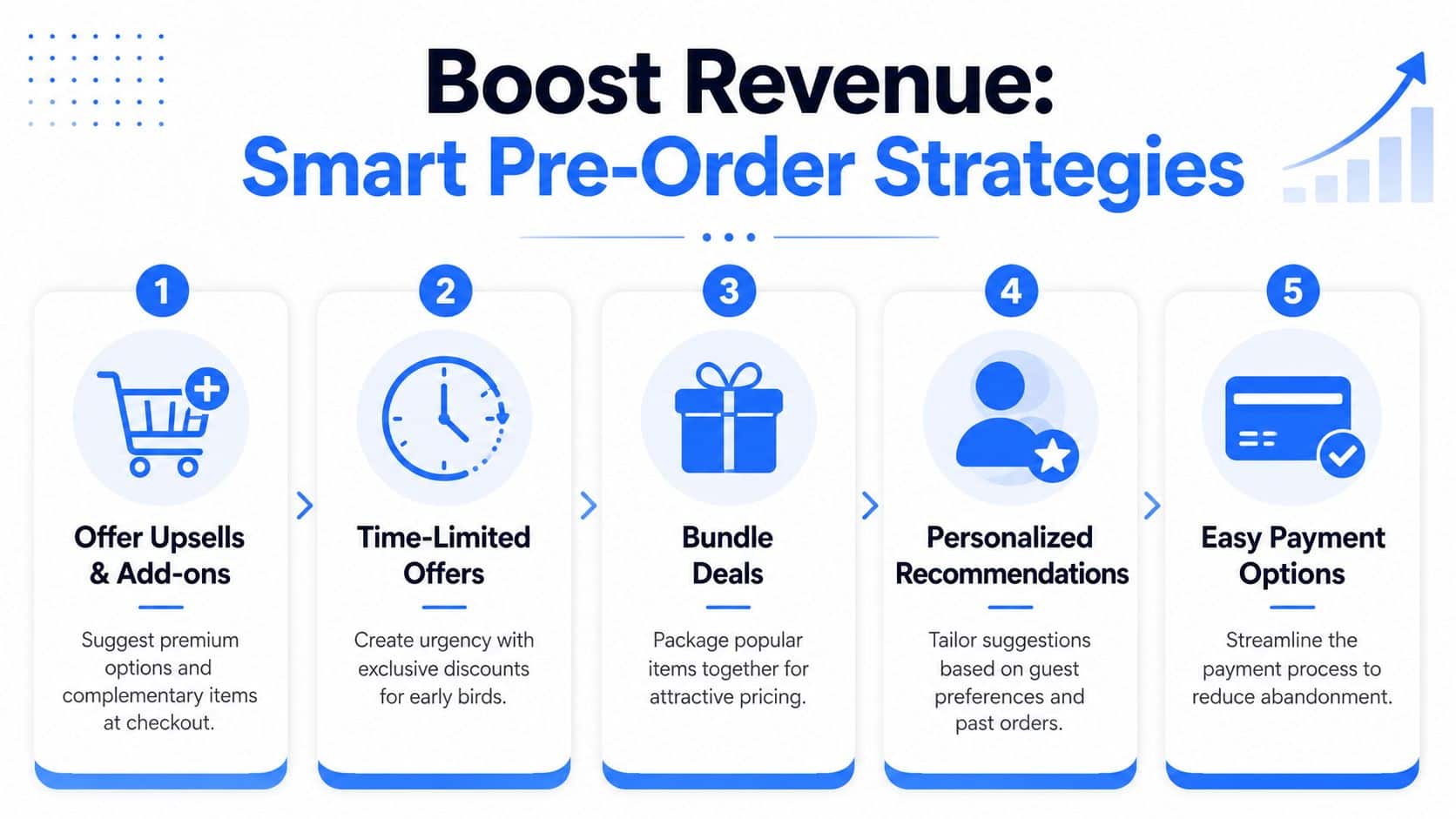
Build upsells into the ordering journey
Guests are far more likely to buy extras when the offer appears at the moment they're making their food choice. If you ask them to add things later, response drops and the organiser ends up acting as the middleman again.
Good pre-order upsells usually include:
- Paid menu upgrades: premium starters, steaks, cheese courses, or celebratory desserts.
- Arrival extras: welcome cocktails, canapés, or table snacks.
- Event add-ons: cakes, prosecco, wine packages, or late-night food.
Keep the choices relevant to the event type. A wedding guest responds differently from a conference attendee.
Use drinks pre-orders properly
Drinks are often the biggest missed revenue line because teams treat them as an afterthought. If you present them clearly before the event, guests and organisers buy with less hesitation.
The brief for this article called for noting around 23 percent wet-spend uplift, and that's directionally useful as an operational benchmark. The strongest outcomes tend to come when the drinks offer is visible early, easy to understand, and linked to the table or group rather than left for ad hoc ordering on the day.
A hotel using this approach reported a 251% wet spend uplift from drink pre-orders. That's an outlier result, but it shows what can happen when pre-orders are treated as a revenue channel rather than a form-filling exercise.
Use the ordering journey to make buying easy:
- Show bottle packages clearly
- Offer non-alcoholic alternatives alongside alcohol
- Let organisers assign drinks to tables
- Collect payment before the event where appropriate
If your team wants a more structured commercial approach, this guide on how pre-orders increase event revenue by 20-30 is a useful operational reference.
Frequently Asked Questions about Event Pre-Orders
How do you handle guests who don't respond by the deadline
Set the deadline early and communicate what happens if it's missed. In practice, that usually means the guest receives the default menu option or the organiser makes the choice on their behalf. The key is to make that rule visible before invitations go out.
Can menus be customised for different events
Yes, and they should be. A private dinner, conference lunch, festive party, and wedding breakfast all need different menu logic. In a system like Creventa, operators can upload multi-course menus with precise allergen data, enable optional upsells with custom pricing, define maximum selections per guest, and toggle automatic reminders to automate the guest submission process, as shown on Creventa's pre-order event setup page.
Should drinks be collected with food or separately
Usually together. Collecting both in one flow reduces missed sales and gives front of house a clearer picture of table-level demand. The exception is when the drinks package is being agreed at organiser level rather than per guest.
How should the kitchen be briefed
Give the kitchen a chef report, not a guest inbox export. They need counts, dietary flags, course totals, and sequencing by table or service wave. Front of house needs a separate version that shows guest-level detail.
What about deposits and final payments
Keep the payment rules simple. Decide upfront whether you're collecting a deposit, full pre-payment, or payment only for upgrades and drinks. If you're using integrated payments, gateways such as Stripe, Adyen, and PlanetPay help centralise collection and reconciliation without turning the events team into an accounts team.
What matters most when choosing a system
Look for event-specific workflow, not generic forms. You need branded guest communication, guest-level dietary capture, drinks pre-orders, table-linked reporting, and public, transparent pricing. If the system can't produce a clean chef report and a service-ready table report, it won't remove enough admin to matter.
If you want a cleaner way to run event pre-orders, Creventa gives hospitality teams one place to manage pre-orders, allergens, seating, reports, payments, enquiries, and post-event feedback without relying on spreadsheets and email chains.
Jake Crimmin, Hospitality Events Specialist, Creventa. Jake works with hotels and venues on event operations, focusing on how pre-orders and allergen data flow from the guest through to the kitchen.